Can You Run a Window AC Inside?
Yes, you can run a window AC inside a room, but only if its hot exhaust air goes outdoors through a hose or vent. A window unit that dumps its exhaust back into the same room just moves heat around and won't cool the space.
On this page (9 sections)
- Why a window AC needs an outdoor exhaust
- Can you run a window AC inside without a window?
- What happens if you run it with the window closed?
- How do you vent a window AC when the window stays partly open?
- Can a portable AC run fully inside a room?
- What's the best indoor setup for a room with one window?
- How do you set up an indoor AC safely?
- How do you install a window unit correctly?
- When should you skip an indoor window AC setup?
Yes, you can run a window AC inside a room, but only when the unit's hot exhaust air goes outdoors. A window air conditioner cools by pulling heat from the room and dumping it outside, so the exhaust path decides whether the setup works.
If you close the window or leave the unit fully indoors with no vent, the heat and moisture it removes come straight back. The room won't get cooler, and the unit runs harder for nothing.
Why a window AC needs an outdoor exhaust
A window unit moves heat outdoors rather than deleting it. The compressor and condenser coil release warm air on the outside half of the unit, and the cooled air comes into the room on the inside half.
That split is why window units are built in a box that straddles the sill. One side faces the room and the other faces the yard or alley.
If both sides sit in the same room, the warm exhaust feeds straight back into the cooled air supply.
The result is a loop. The unit removes heat, dumps it into the same room, and pulls it in again.
You feel noise and moving air, but the temperature barely drops.
So "running a window AC inside" really means the unit's body sits at a window or wall opening, with its exhaust side outside.
Can you run a window AC inside without a window?
No. A standard window unit needs an exterior opening for its exhaust side.
Without a window, wall sleeve, or other outdoor vent path, the condenser has nowhere to release heat.
Some people try a fully indoor setup with the back of the unit facing the room. That's the wrong direction and defeats the design.
The warm side must face outside, or the unit can't reject heat.
If the space has no window but does have an exterior wall, a through-the-wall install or a wall sleeve can work. That's a construction job, so weigh it against a portable unit with a hose before you commit.
For rooms with no outdoor access at all, a standard window AC isn't the right appliance. Look at a unit with a hose you can route to a vent.
What happens if you run it with the window closed?
The unit loses its cooling effect and the room stays warm. With the window shut, the exhaust can't leave, so heat builds in the room instead of going outside.
The compressor keeps working against that trapped heat. Over time the unit runs longer cycles for less cooling, and the room can feel humid because the moisture the unit pulls out has nowhere to go.
Keep the window open or use a vent kit that holds the unit in place while leaving the exhaust side exposed to outdoor air.
How do you vent a window AC when the window stays partly open?
Use a window kit or seal so the open gap around the unit vents out while the rest stays closed. The exhaust needs outdoor air, and the seal keeps hot outside air from leaking in around the unit.
A window air conditioner for casement windows needs a different approach than a double-hung frame. Side-hinged and crank-out windows don't hold a standard window unit, so a seal kit that wraps the exhaust hose is the practical route.
Our guide to a window air conditioner for casement windows covers those frames.
Sliding windows have their own fit issues. A window air conditioner for sliding windows needs a panel or bracket that fills the open side, so the unit stays put and the exhaust vents out.
The Yotache kit is two 1 in x 1 in x 6.5 ft foam rolls, 13 feet total, in a soft NBR and PVC foam. It's non-adhesive, so you set it on top of the unit and lower the window to compress the seal.
Cut it to size with scissors or a blade and bend it to fit odd gaps.
It suits double-hung and sliding frames where the sash can press down on the foam. It isn't a vent hose kit, so it won't help a casement window or a portable unit's hose.
Can a portable AC run fully inside a room?
Yes, a portable air conditioner sits inside the room, but its exhaust hose still has to reach a window or vent. The hose carries the hot air out, so the unit itself can stand on the floor.
This is the setup most people mean when they ask about running AC inside. A portable unit doesn't need to straddle a sill.
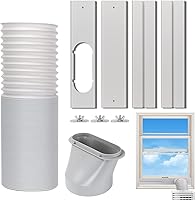
It needs a hose path to the outdoors, plus a seal around the window opening so the exhaust doesn't spill back in.
The IKSTAR seal kit is built for that job on non-sliding windows. It's a fabric seal with an adjustable zipper for the hose, sized for window perimeters up to 400CM/157 in.
It works with single and dual hose portable units and needs no drilling.
Clean and dry the frame, apply the hook tape, attach the seal, and run the hose through the zipper. Tighten the opening around the hose so warm outdoor air has less room to come back in.
Measure the window perimeter first and pick the closest larger size.
What's the best indoor setup for a room with one window?
Pick a portable unit with a hose and a window seal when the room has a single usable window. It lets you keep the window mostly closed while the exhaust goes out, which is easier than propping a heavy window unit in a frame.
The Black+Decker BPACT10WT is a 10,000 BTU portable air conditioner rated for rooms up to 450 sq ft. It runs as an air conditioner, dehumidifier, and fan, with a remote that includes a Follow Me thermostat function.
Casters and side handles let you move it between rooms.
It includes an installation kit with an exhaust hose, hose adapters, a window casement panel, and a drain hose. The window panel is made for double-hung and sliding windows, so pair it with a seal kit for casement or crank-out frames.
It measures 15.3 x 14 x 24.8 in and weighs 48.6 lbs.
This is the pick for a bedroom, office, or apartment where you want the unit on the floor and only the hose at the window. A standard window unit is the better fit when the room has a double-hung window and you don't mind the unit in the frame.
How do you set up an indoor AC safely?
Keep the exhaust path clear, seal the gap, and give the unit its own outlet. Safety and cooling both come down to the vent path and the electrical load.
Confirm the exhaust side or hose reaches outdoor air and that nothing blocks the flow. A blocked hose or vent pushes hot air back into the room and can overheat the unit.
Seal the open gap around the unit or hose. Foam strips and fabric seals close the space so outside heat and humidity don't leak in past the exhaust.
That's the step most DIY setups skip.
Plug into a dedicated outlet and skip extension cords. Follow the unit's cord and plug instructions.
Portable units collect water in a tank or drain through a hose, while window units drip condensation to the outside, so the outdoor side needs to sit slightly lower than the indoor side.
How do you install a window unit correctly?
Set the unit level in the window, tilt it slightly toward the outside, and close the sash against it. That basic fit is what makes the unit cool well and drain properly.
Measure the window opening against the unit's width and height before lifting anything. The unit's frame and side panels should fill the opening without gaps, and the window sash should lock down against the top.
Use the brackets or support the unit needs so its weight doesn't rest on the sash. A heavy unit that leans inward can let water pool and leak into the room.
Close the gap around the frame with foam or a seal. A loose fit lets hot outdoor air in around the unit, which cancels much of the cooling.
For the full sequence, see how to install a window air conditioner. It covers the frame, the tilt, the seal, and the first run.
If the unit will run for long stretches in hot weather, read can a window ac unit run continuously to plan the settings and check when a long cycle is normal.
When should you skip an indoor window AC setup?
Skip it when the room has no outdoor vent path or when the unit would sit fully inside a closed space. In those cases, a window unit can't cool the room, and a portable unit without a vent can't either.
Skip a window unit in a room with only a casement or crank-out window unless you add the right seal kit for the hose setup. The frame won't hold the unit safely.
Skip a fully indoor setup in a sealed garage or basement with no vent. Heat and moisture build up, and the unit works against itself.
For everyone else, the answer to "can you run a window ac inside" is yes, as long as the exhaust leaves the room. Choose a window unit for a double-hung frame, or a portable unit with a hose and a seal kit for a single window in an apartment or bedroom.
Seal the gap, keep the vent clear, and the unit will cool the space it's rated for.
Frequently asked questions
Is it safe to run a window AC inside a garage?
It can be, as long as the unit is installed in an exterior wall or window that vents outdoors. A garage without a vent path isn't a safe spot for a standard window unit, because exhaust and moisture build up in the space.
Can a portable air conditioner run fully inside?
A portable AC can sit inside a room, but its exhaust hose still has to reach a window or vent. It cools the room by sending hot air outside, so it needs the same outdoor path that a window unit does.
Can you run a window AC inside a tent?
Only with a real vent for the exhaust and enough power to run the unit. A window unit needs outdoor air on its condenser side, so a tent setup has to open or duct the exhaust out, and most tents aren't set up for that.