Through-the-Wall vs Window Air Conditioner: Which Wins? (November 2026)
For the through-the-wall vs window air conditioner choice, pick a window unit for a removable setup in a compatible window. Choose a through-the-wall unit when you have an approved permanent opening and want to keep the window clear.
On this page (10 sections)
- Through-the-wall vs window air conditioner: which is easier to install?
- Which type works better for renters and homeowners?
- Which setup preserves light, access and useful room space?
- Which type is more secure and weather resistant?
- How should you choose cooling capacity?
- Does through-the-wall or window cooling cost less to run?
- Which air conditioner is quieter?
- What care does each installation need?
- What should you check before ordering?
- Which through-the-wall vs window air conditioner should you choose?
Choose a window air conditioner for a removable setup in a compatible window; choose a through-the-wall unit for an approved permanent opening that leaves the window clear. The through-the-wall vs window air conditioner decision starts with where you can safely install the appliance.
Both types move room heat outdoors, so a wall opening doesn't automatically mean stronger cooling. Room size, airflow, capacity and the exact model matter more than the mounting style.
For a broader comparison, see our guide to window, portable and through-the-wall air conditioners.

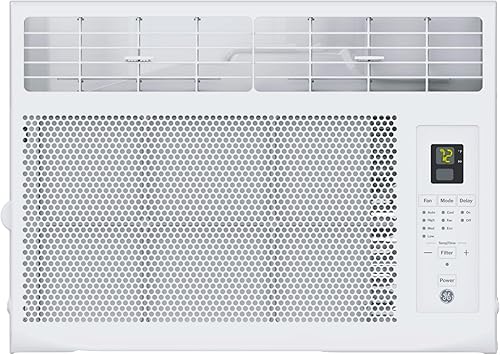 Best for small home offices
GE 6,000 BTU electronic window air conditioner
Through-the-wall vs window air conditioner: which is easier to install?
A window unit usually requires less building work, while a new through-the-wall installation needs a finished opening in an exterior wall. Replacing an existing wall unit can be simpler if the sleeve, power supply and opening already suit the replacement.
Window installation still requires solid support and careful measurements. Check the window style, usable opening, sill condition and any exterior obstructions before choosing a unit.
The cabinet's width isn't the same as the required window width. Mounting rails, side panels and brackets can need extra space, so use the installation dimensions in the manual.
Our window air conditioner installation guide explains the main fit and setup decisions.
A new wall installation needs checks for structural framing, wiring and plumbing before anyone cuts. A qualified contractor can assess the location, plan support and finish the opening to keep weather out.
Ask what the work includes beyond placing the appliance. Interior trim, exterior sealing, sleeve installation and repair of disturbed wall surfaces all affect the scope of the job.
Can a window air conditioner replace a through-the-wall unit?
A window air conditioner can replace a through-the-wall unit only if its manufacturer approves that mounting method. A cabinet that slides into the opening can still have blocked vents or the wrong support arrangement.
Many window models draw outdoor air through side vents. A thick wall or tight sleeve can cover those vents, restricting the airflow needed to release heat.
Through-the-wall models are designed for their approved wall and sleeve arrangements. Don't assume that all wall units share the same opening, rear grille or sleeve requirements either.
For a replacement, identify the existing sleeve and compare it with the new model's instructions. Keep a usable sleeve only when compatibility and condition are confirmed.
Which type works better for renters and homeowners?
A window unit usually suits renters and short-term plans, while a wall unit suits an approved permanent installation. An apartment with an existing wall sleeve is an exception worth checking before shopping.
Renters should confirm building rules for exterior equipment, support brackets, drainage and seasonal removal. Permission for one window doesn't necessarily apply to every window in the apartment.
Skip a new wall opening if you expect to move soon or can't get written approval. Closing and repairing that opening later is a building project of its own.
Homeowners who want to preserve a view or use the window regularly may prefer a wall unit. That choice makes more sense when the room will need cooling in the same location for years.
If neither mounting method is allowed, consider a portable unit with a suitable exhaust route. Our portable vs window air conditioner guide explains the space and installation tradeoffs.
Which setup preserves light, access and useful room space?
A through-the-wall unit preserves the window opening, but it uses a fixed spot on the exterior wall. A window unit uses part of the window and may require furniture changes to keep its airflow clear.
Before choosing a wall location, picture the room with the appliance installed. A sofa, tall dresser or curtain in front of it can interfere with airflow and make controls harder to reach.
Avoid placing either type where cooled air blows straight into a nearby obstruction. The air needs room to circulate through the occupied part of the room.
Window access matters beyond the view. Check whether the sash needs to open for ventilation, cleaning or emergency escape, and don't obstruct a required exit.
Seasonal removal can restore the window, but plan the lifting and storage first. If moving a heavy appliance twice a year is impractical, include that burden in your decision.
Which type is more secure and weather resistant?
Correct support and sealing matter more than mounting style. Either type can cause problems if it shifts, leaves gaps or sends water where it shouldn't.
A window unit needs the fastening and support specified by its manufacturer. Expandable side panels close gaps, but they aren't a substitute for the required structural support.
Read our guide on whether window air conditioners need a support bracket before choosing mounting hardware.
A wall unit needs a sound sleeve or other approved mounting system. Check for corrosion, damaged seals and gaps where the sleeve meets the wall.
Follow the exact instructions for cabinet position and drainage. Don't add a generic tilt, drill drain holes or plug openings based on advice for a different model.
Water also needs a safe path outdoors. Consider the walkway, balcony or neighboring window below the appliance when planning its location.
How should you choose cooling capacity?
Size the air conditioner for the room before comparing controls or convenience features. Both mounting styles need enough capacity for the space, but buying the largest unit that fits can create a different problem.
An oversized unit may cool the air quickly and stop before removing enough moisture. An undersized unit may run for long periods while struggling to reach the set temperature.
Measure length and width, then note ceiling height, direct sun, heat-producing appliances and how many people use the room. An open doorway into another large space can also change the cooling load.
Start with our air conditioner sizing guide, then use the chosen model's room guidance. A room near the top of a coverage range deserves closer attention if it gets strong afternoon sun.
Which of these window models fits your room?
The LG suits a larger room than the GE, but both belong on the window side of this comparison. Neither is a substitute for an approved through-the-wall model.
The LG 8,000 BTU window air conditioner is intended for rooms up to 350 sq ft. Its 3 cooling and fan speeds let you adjust airflow, while the remote and electronic controls keep changes straightforward.
Choose it for a medium bedroom or living area within that range after checking window fit. Skip it if the room needs more capacity or you need an appliance approved for an existing wall sleeve.
The GE 6,000 BTU electronic window air conditioner is intended for rooms up to 250 sq ft. Its digital thermostat, remote and 24-hour timer suit a small office or bedroom with a regular cooling schedule.
Choose the GE when that smaller coverage matches your space and you want simple controls. Skip it if you need WiFi or smart home control, since it supports neither.
Does through-the-wall or window cooling cost less to run?
Compare the exact models' efficiency and your expected use, rather than assuming either installation type costs less to run. Capacity, temperature settings, weather and air leaks all affect energy use.
Use comparable efficiency figures when evaluating units of similar capacity. A more efficient model can still use more electricity overall if you run it longer or cool a larger space.
Installation costs are a separate decision. A new wall opening adds work that a compatible window may avoid, while an existing usable sleeve can change that comparison.
For operating costs, our guide to how much a window air conditioner costs to run explains how wattage, hours of use and your electricity rate work together.
The GE includes Energy Saver Eco mode, which cycles operation to maintain the set temperature. Its timer can also help you avoid cooling an empty room longer than needed.
For either type, close exterior doors and windows during cooling. Use curtains or shades to reduce direct sun, and keep furniture away from the air outlet.
Which air conditioner is quieter?
Choose by the exact model and sound measurement, since a wall opening doesn't guarantee quieter operation. Fan speed, compressor cycling and vibration all affect what you hear.
LG gives a sound level as low as 53 dB on low mode. GE gives 52 dBA on low and 56 dBA on high for its model.
Those figures alone don't guarantee a clear winner because the sound labels and measurement conditions need to match. Don't choose between them based only on the small difference between their low-mode numbers.
Consider where the unit sits relative to your pillow or desk. A lower fan setting may suit quiet periods, but the appliance still needs enough airflow to cool the room.
Rattling can also come from loose hardware or contact with the window frame. Check approved fasteners and seals rather than wedging random materials around the cabinet.
What care does each installation need?
Both types need clean filters, clear airflow and periodic checks for leaks or damage. A window unit may involve seasonal lifting, while a wall unit needs care around a permanent sleeve and exterior opening.
Disconnect power as directed before cleaning. Follow the manual's filter schedule, checking more often when dust, pets or frequent use cause faster buildup.
Both window models here have washable filters. Let a cleaned filter dry as instructed before reinstalling it, and don't run the appliance without required parts.
Our window air conditioner cleaning guide covers the cleaning tasks to plan around. Keep water away from electrical parts and leave work requiring cabinet removal to someone qualified.
Inspect accessible seals and outdoor openings without leaning out or taking unsafe access routes. Debris, damaged trim and water stains deserve attention before the next long stretch of use.
For seasonal storage, dry and store the window unit as its manual directs. Our guide to window air conditioner covers for winter explains the choices if you plan to leave it installed.
Don't wrap an operating appliance in a cover. Any seasonal cover must suit the unit and leave required drainage and ventilation paths clear.
What should you check before ordering?
Confirm permission, opening dimensions, power and access before buying. These checks prevent a capacity match from becoming an installation mismatch.
Use this order:
- Confirm the allowed location. Check building rules and preserve required emergency access.
- Measure the actual opening. Record the window style or sleeve details, not just the old appliance's cabinet size.
- Check exterior clearance. Screens, masonry recesses, railings and nearby walls can interfere with installation or airflow.
- Check electrical requirements. Match voltage, plug type, grounding and circuit needs to the manual.
- Plan lifting and service access. Arrange enough help and leave room to reach filters and controls.
The GE requires a double-hung window 27.125 to 36 inches wide, with a minimum opening height of 13.375 inches. Don't use its cabinet dimensions as the required window opening.
The LG uses 115V, but voltage alone doesn't confirm that an outlet and circuit are suitable. Follow the model's full electrical instructions and avoid extension cords or power strips.
For a wall replacement, check wall thickness and the sleeve's depth as well as height and width. Confirm any required rear grille, seals and trim before removing the old unit.
Which through-the-wall vs window air conditioner should you choose?
Choose the installation you can support, seal and maintain, then select the right capacity. A higher-capacity appliance or extra control mode won't solve the wrong opening.
Pick a window unit when you have a compatible window, permission and a practical plan for installation or removal. Between these 2 models, choose LG for the larger room range and GE for the smaller space.
Pick a through-the-wall unit when you have an approved opening or compatible sleeve and want to keep the window available. Skip that route if a new opening, repair work or fixed location doesn't fit your plans.
Before ordering either type, measure the room and opening on the same day so you're comparing usable options. If your building rules leave you between cooling formats, use our air conditioner type guide to choose the next route.
Frequently asked questions
Is a through-the-wall air conditioner better than a window unit?
A through-the-wall air conditioner is better when keeping the window clear matters and you have an approved wall opening. Choose a window unit for a removable installation in a compatible window, especially if you rent or expect to move; neither type automatically provides better cooling or lower running costs.
Can you put a window air conditioner in a wall?
Put a window air conditioner in a wall only when the manufacturer approves that installation for the exact model. A wall can block side vents that need outdoor airflow; cabinet dimensions alone don't prove compatibility, so confirm the allowed mounting method, wall thickness and clearances before making an opening.
Does a through-the-wall air conditioner need a sleeve?
Many through-the-wall air conditioners need a compatible sleeve, but the exact requirements depend on the model. Match the sleeve dimensions, rear grille, support and seals to the installation instructions; when replacing an old unit, inspect the existing sleeve for corrosion or damage before assuming you can reuse it.
Which type is easier to install?
A window air conditioner is generally easier to install when the window and mounting hardware are compatible. A new through-the-wall installation adds cutting, support and weather sealing to the job; replacing a wall unit can be simpler when a sound, approved sleeve and suitable electrical supply are already in place.
Which air conditioner keeps the window usable?
A through-the-wall air conditioner leaves the window opening available because the unit sits in an exterior wall; that helps preserve daylight, views and access to the sash. You still need a suitable wall location with clear airflow, and neither installation should obstruct a required emergency exit.


