Portable vs Window Air Conditioner: Which Cools Better? (November 2026)
For a portable vs window air conditioner choice, pick a window unit for regular cooling in one room. Choose a portable unit when window mounting isn't practical and you have floor space plus a suitable outdoor exhaust route.
On this page (11 sections)
- Portable vs window air conditioner: which cools better?
- What size room can these air conditioners handle?
- Which type is easier to install?
- Which one takes up less room?
- When is portable cooling worth the extra setup?
- Which model suits your daily routine?
- Which is quieter for sleeping?
- Which one may use less energy?
- What care does each type need?
- What mistakes should you avoid before buying?
- Portable vs window air conditioner: how should you decide?
A window unit is usually the better choice for regular cooling in one room; a portable suits spaces where window mounting isn't practical. In a portable vs window air conditioner comparison, start with installation limits, then match capacity to your room.
A window AC leaves your floor clear but occupies the window opening. A portable stands indoors and sends heat outside through a hose, so it still needs access to a suitable window or another approved exhaust route.
Choose for the room where you'll use it most. Moving an AC occasionally can be useful, but reconnecting it every evening may become a chore.
 Best for switching rooms
Black+Decker 10,000 BTU portable air conditioner

Portable vs window air conditioner: which cools better?
A window air conditioner usually cools more efficiently because it releases heat directly outdoors without an exhaust hose running through the room. A portable can cool effectively when its capacity, vent route and window seal suit the space.
The hose carries hot air, so keep it as short and straight as the instructions allow. Kinks restrict airflow, and gaps around the window panel let outdoor heat back inside.
Many single-hose portable designs also exhaust room air, drawing replacement air through gaps elsewhere in the home. Dual-hose designs handle airflow differently; our one-hose vs dual-hose portable AC guide explains that tradeoff.
How do portable vs window air conditioner BTUs compare?
Don't choose by the largest BTU number alone. Portable ACs can show both ASHRAE capacity and a lower DOE figure, also called SACC, that better accounts for losses during use.
The Black+Decker has a 10,000 BTU ASHRAE figure, with DOE figures of 5,550, 5,750 or 6,300 depending on its production batch. The LG and Frigidaire window models are each 8,000 BTU, so the headline numbers aren't a direct capacity match.
Use our guide to portable AC BTU, SACC and hoses to make sense of those numbers. A larger advertised number doesn't automatically mean stronger cooling in your room.
What size room can these air conditioners handle?
Measure the room, then account for heat gain before choosing capacity. Black+Decker recommends its portable for up to 450 sq ft, while LG and Frigidaire recommend these window units for up to 350 sq ft.
Those are brand recommendations, not promises for every room of that size. Strong afternoon sun, high ceilings, poor insulation and heat from cooking can increase the cooling load.
Multiply the room's length by its width to find floor area. If the room opens into a hallway or another living area, decide whether you can close it off during use.
An undersized unit may run for long periods without reaching your setting. An oversized conventional unit can cool too quickly and cycle off before removing enough moisture, leaving the room cool but clammy.
Use the room air conditioner size guide before deciding. For an open-plan space, don't assume a bedroom-sized AC will cool every connected room evenly.
Which type is easier to install?
A portable usually avoids lifting the cabinet into a window, while a window unit needs secure mounting and careful lifting. Neither type is ready to cool until you finish its outdoor connection and seal the opening.
For a portable, measure the window opening and plan the hose route before placing furniture. The Black+Decker includes a kit for double-hung or sliding windows, but the panel still has to fit your opening.
Position the cabinet within the permitted hose reach and leave the required clearance around its vents. Don't hide it behind a sofa or extend the hose with an improvised length.
For a window unit, check the allowed opening width and height, sill requirements and support method. Cabinet dimensions alone don't tell you whether an AC will fit, because the installation also needs space for its panels and hardware.
Read how to install a window air conditioner before arranging help with lifting. Follow the model's support requirements and local rules; see when a window AC needs a support bracket.
What if you rent or have an unusual window?
Check permission and window style before buying. A portable may avoid mounting a heavy cabinet in the opening, but a landlord or building can still restrict exhaust panels or changes to windows.
A casement window usually needs a different approach from a double-hung window. Our guide to air conditioners for casement windows helps you identify the options.
Keep any required escape route usable and check building rules about equipment projecting outside. If neither type fits your window safely, solve that problem before comparing controls or cooling modes.
Which one takes up less room?
A window AC saves floor space, making it the stronger fit for a crowded bedroom or small living room. A portable needs room for its cabinet, hose and unobstructed airflow near the window.
The Black+Decker measures 15.3 inches wide, 14 inches deep and 24.8 inches high. Mark that footprint on the floor, then add the clearances its instructions require.
Check the walking path, curtains and access to drawers. A cabinet that fits beside a bed can still be awkward if its hose crosses the only route through the room.
A window unit also has a space cost: it reduces the view and use of that opening. Check that its indoor projection won't interfere with blinds or direct all the cold air into furniture.
For broader choices in tight rentals, see our air conditioners for apartments guide.
When is portable cooling worth the extra setup?
Choose a portable for occasional moves between prepared rooms, especially on the same floor. Skip it if you expect effortless daily moves or need cooling in 2 rooms at once.
The Black+Decker has casters and side handles, but it weighs 48.6 lb. Rolling across a clear floor is different from lifting it over thresholds or carrying it upstairs.
Every destination needs a suitable exhaust connection and power outlet. If the windows differ in size, moving also means adjusting and resealing the panel.
Plan for only one cooled room at a time. Moving the unit to a home office lets the bedroom warm again, so this approach works best when your schedule clearly separates those spaces.
A window AC suits a room that needs cooling throughout the season. Skip either window model if frequent removal is central to your plan.
Which model suits your daily routine?
Choose the Black+Decker for occasional moves, the LG for regular fixed-room use, and the Frigidaire for bedtime scheduling. The controls matter most after you've confirmed capacity and installation fit.
Black+Decker: for rooms that share one AC
The Black+Decker's Follow Me remote acts as a thermostat, letting temperature control respond near the remote. Keep it in a representative spot rather than beside a sunny window or directly in the cold airflow.
It also has fan and dehumidifier modes. Fan mode circulates air without active cooling, while moisture removal requires you to follow the drainage instructions for that mode.
LG: for a room cooled most days
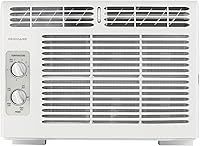
The LG offers 3 cooling and fan speeds, Auto Cool, a 24-hour timer and adjustable airflow direction. These suit a room where you want to set the temperature and make small changes as conditions shift.
Auto restart turns the unit back on after power returns. That is useful for restoring operation, though it isn't a reason to leave cooling needs unattended during an outage.
Frigidaire: for a planned bedtime schedule
The Frigidaire offers Eco mode, Sleep mode and a 24-hour on/off timer. Sleep mode gradually raises the temperature overnight, so choose it if you prefer less cooling as the night goes on.
Skip Sleep mode if you want a fixed temperature until morning. Its 6-way directional airflow helps you aim the air away from your pillow or toward the occupied part of the room.
Which is quieter for sleeping?
There is no clear noise winner among these models from their sound figures alone. LG gives as low as 53 dB on low mode, Black+Decker gives 52 dB, and Frigidaire gives 54 dBA.
Those figures may reflect different conditions, so don't treat a small numerical gap as a reliable bedroom ranking. Fan noise, compressor cycling and vibration all affect what you hear.
A portable keeps its compressor inside the room, making cabinet placement important. Leave the required clearance and avoid placing it against furniture that could rattle.
For a window model, follow the mounting instructions closely to limit avoidable vibration. Cool the bedroom before bedtime so a lower fan setting has a better chance of maintaining comfort.
Browse quiet portable air conditioners or quiet window air conditioners if sound is your main concern.
Which one may use less energy?
A window unit often uses less electricity for comparable cooling, but these figures don't support an exact running-cost ranking among the 3 products. Compare efficiency labels for the models and capacities you're considering.
Frigidaire has an annual consumption figure of 550 kWh. Annual estimates use assumed operating conditions, so your actual use will change with the weather, thermostat setting and hours of operation.
Watts measure power, while kilowatt-hours measure energy used over time. To estimate operating cost, multiply average power in kilowatts by running hours and your electricity rate, allowing for compressor cycling.
Keep doors and windows closed while cooling, shade sunny glass and avoid setting the thermostat colder than you need. A colder setting usually makes the unit run longer rather than cool the room faster.
Our guide to the cost of running a window air conditioner explains the calculation. Include installation supplies and seasonal removal needs when comparing the full cost of ownership.
What care does each type need?
Both types need clean filters and clear airflow; a portable also needs attention to its hose and drainage. Disconnect power before cleaning and follow the model's care instructions.
All 3 units have washable filters. Check them regularly during heavy use, wash as directed and let them dry fully before reinstalling.
The LG and Frigidaire have filter reminders, but dust can build up sooner in a busy or dusty room. A reminder doesn't replace looking at the filter.
For a portable, inspect the window seal and hose connection after moving it. Follow the instructions for draining collected water, especially during dehumidifier use, and never assume every mode handles moisture the same way.
For a window unit, keep outdoor airflow clear and don't block designed drainage paths. Our guide to cleaning a window air conditioner covers routine care without soaking electrical parts.
Before seasonal storage, follow the drying, draining and removal steps in the manual. Store the remote, panels and installation hardware together so the next setup is complete.
What mistakes should you avoid before buying?
Check fit, power and exhaust needs before choosing by features. These mistakes can make an otherwise suitable AC inconvenient or unusable:
- Buying a portable for a windowless room. It needs an approved outdoor exhaust route; a bucket or open hose inside won't remove the heat.
- Measuring only the cabinet. Window panels, support hardware, hoses and airflow clearance also need space.
- Ignoring the outlet location. Follow the electrical instructions and plug into the required outlet rather than planning around an extension cord or power strip.
- Expecting whole-home cooling. Closed doors and walls limit airflow between rooms.
- Blocking the return vent. Curtains, bedding and furniture can restrict the air the AC needs to draw in.
- Choosing capacity by floor area alone. Sun, ceiling height and connected spaces also affect the load.
Check the installed setup from both sides of the window before regular use. Look for loose panels, blocked vents and anything that prevents the unit from sitting securely as directed.
Portable vs window air conditioner: how should you decide?
Choose a window unit for a room you cool most days, provided the opening permits secure installation. Choose a portable for occasional moves or limits on window mounting, provided you can spare floor space and vent it correctly.
For this portable vs window air conditioner decision, rule out installation problems first. Then choose enough capacity for the room and controls that match how you live.
Pick the Black+Decker when moving cooling between compatible rooms is worth reconnecting the exhaust. Pick the LG for everyday fixed-room cooling, or the Frigidaire if its bedtime temperature changes and scheduling fit your routine.
If the type is settled but the model isn't, compare the best window air conditioners or best portable air conditioners. Before ordering, use the window AC installation guide to confirm the opening and support plan.
Frequently asked questions
Which cools better, a portable or window air conditioner?
A window air conditioner usually delivers more efficient cooling in a suitable installation; a portable can still be the better fit when window mounting isn't practical. Size either type for the room's heat load, and compare portable DOE or SACC capacity rather than choosing by the largest advertised BTU number.
Does a portable air conditioner need a window?
A portable air conditioner needs an approved exhaust route outdoors, usually through a window kit; the Black+Decker here includes a kit for double-hung or sliding windows. It won't cool a closed room properly with the exhaust hose left indoors, because that sends the removed heat back into the room.
Is a window air conditioner cheaper to run?
A window unit often uses less electricity for comparable cooling, but the exact difference depends on capacity, efficiency and use. Compare energy labels under matching conditions, then factor in your electricity rate and operating hours; good seals, clean filters and keeping doors closed also help limit wasted cooling.
Can you move a window air conditioner between rooms?
You can move a window air conditioner, but each move requires removal, lifting and secure reinstallation in another compatible opening. A portable is more practical for occasional moves on one floor; its hose and window panel must also move, so check both rooms before counting on that flexibility.
Which air conditioner is quieter in a bedroom?
These sound figures don't guarantee a clear bedroom winner because their measurement conditions may differ; consider compressor cycling, fan speed and distance from the bed as well as decibels. A portable keeps its compressor indoors, while a window model can transmit vibration through its mounting if it isn't installed securely.