8 Best Air Conditioners for Apartments (November 2026)
The best air conditioners for apartments include the Frigidaire 5 for small bedrooms, the Black+Decker 9 for room-to-room moves, and the GE 5 for dial-control buyers.
On this page (8 sections)
- The best air conditioners for apartments
- Which apartment air conditioner type should you choose?
- How should you size an AC for an apartment room?
- What should renters check before installing a window unit?
- How do you set up a portable AC in an apartment?
- How do you keep an apartment air conditioner working well?
- Which apartment cooling mistakes should you avoid?
- Which air conditioner is the best fit for your apartment?
The Frigidaire 5,000 BTU window air conditioner is the best air conditioner for an apartment bedroom up to 150 sq ft with an approved window installation. Choose the GE 6,000 BTU for a larger room, or a portable model when you need flexibility.
Start with the space you actually use: a bedroom at night, a home office during the day or one open living area. One room AC isn't a reliable way to cool several closed rooms.
Use our room size guide for air conditioners before comparing features. Our portable versus window AC comparison helps you choose the format your apartment can accommodate.
Our picks at a glance
-
1
 Best for small bedrooms
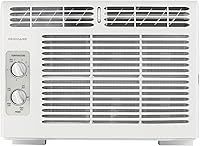
Frigidaire 5,000 BTU window air conditioner
8.6/10 our score
See it on Amazon -
2
 Best for room-to-room moves
Black+Decker 9,000 BTU portable air conditioner
8.5/10 our score
See it on Amazon -
3

- 4
 Check it
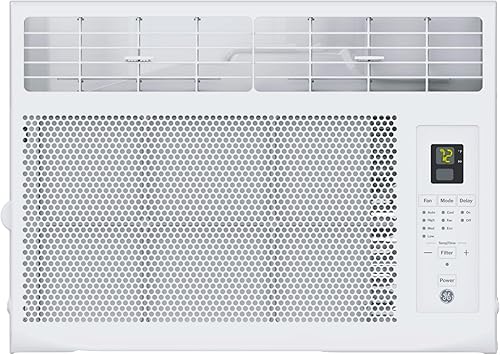
GE 6,000 BTU electronic window air conditioner
Best for larger apartment rooms - 5
 Check it
Midea 10,000 BTU portable air conditioner
Best for connected households - 6
 Check it
LG 5,000 BTU window air conditioner
Best for narrower double-hung windows - 7
 Check it
Black+Decker 7,500 BTU portable air conditioner
Best for sliding-window renters - 8
 Check it
SereneLife 8,000 BTU portable air conditioner
Best for tight floor plans
The best air conditioners for apartments
The Frigidaire leads for small-room cooling, while the other picks address different window sizes, controls and portable setups. Choose by room and installation fit before using score to break a tie.
DearDresser compared capacity, window requirements, controls and care needs. Scores reflect those features and apartment suitability; a lower-scoring unit can still be the right choice when its installation range fits your home.
Frigidaire 5,000 BTU window air conditioner: Best for small bedrooms
- For rooms up to 150 sq ft
- Two fan speeds
- Washable filter
- Auto restart
Choose this window unit for a small bedroom where keeping the floor clear matters. Temperature control and auto restart keep everyday operation straightforward.
Pros
- Small-room cooling without a floor unit
- Two fan speeds and temperature control
- Auto restart restores prior settings
Cons
- Needs an approved window installation
- Too limited for a larger living area
The Frigidaire suits a bedroom where a floor-standing machine would crowd the bed or block a drawer. Its 5,000 BTU capacity covers up to 150 sq ft, making it a focused choice for one small room.
Two fan speeds let you adjust airflow, while temperature control helps maintain your chosen setting. Auto Restart restores the previous settings after power returns, saving you from resetting the unit after an outage.
The washable filter keeps routine care simple, but leave room to reach it after installation. Adjustable side panels help close the window opening; they don't replace the mounting and support steps in the instructions.
Frigidaire gives a sound level of 52 dBA, so expect audible operation near a bed. Place furniture so airflow can cross the room instead of hitting a curtain or headboard.
Choose it for a small, separate room with an approved mounting spot. Skip it for a larger living area or a layout where you expect cold air to travel through several doorways.
Black+Decker 9,000 BTU portable air conditioner: Best for room-to-room moves
- Casters and side handles
- 9,000 BTU ASHRAE and 5,300 BTU SACC
- Cooling, fan and dehumidifier modes
- Follow Me remote
Casters and side handles suit renters who want to shift cooling between rooms. Each location still needs floor space and a suitable window for the exhaust kit.
Pros
- Casters and handles for repositioning
- Remote can act as a thermostat
- Cooling, fan and dehumidifier modes
Cons
- Moving rooms requires reconnecting the vent
- Needs floor space near a suitable window
This Black+Decker makes sense when you want cooling in a home office by day and a bedroom at night. Casters and side handles help with repositioning, though you must reconnect and seal the exhaust setup after each move.
The Follow Me remote acts as a thermostat, making it useful when your seat is away from the cabinet. Keep it near where you want comfort, away from direct sun or other heat sources that could skew its reading.
Capacity is 9,000 BTU ASHRAE and 5,300 BTU SACC. Black+Decker rates coverage up to 400 sq ft, but a sunny open-plan room needs a closer sizing check than that headline figure alone.
Cooling, fan and dehumidifier modes support different conditions without changing machines. The washable filter also needs clear access, so avoid squeezing the cabinet between furniture.
Buy it for planned room-to-room use, with a suitable vent location in each space. Skip it if your plan depends on moving it without reconnecting the hose, or if the cabinet would block your walkway.
GE 5,000 BTU window air conditioner: Best for dial-control buyers
- For rooms up to 150 sq ft
- Mechanical dials
- Two cooling modes and two fan speeds
- Washable filter
This small-room option suits buyers who want physical dials without apps or digital menus. Measure the double-hung window before committing to its installation kit.
Pros
- Physical dials with 10 temperature settings
- No Wi-Fi or app setup
- Auto restart after power outages
Cons
- Controls require reaching the unit
- Kit has specific double-hung window requirements
The GE 5,000 BTU is the direct choice for buyers who want physical dials without apps or menus. It suits a small bedroom or office where you can comfortably reach the controls.
Its coverage is up to 150 sq ft, with 2 cooling modes and 2 fan speeds. The 10 temperature settings let you find a comfortable dial position, rather than choosing a temperature on a digital display.
The kit fits double-hung windows 27.125 to 36 in wide, with an opening at least 13.375 in high. Measure the actual usable opening, including any obstructions from tracks or other hardware.
GE includes foam insulation with the mounting kit. Fit the seals carefully, since a gap beside the unit lets warm air enter and makes room cooling harder.
Choose this GE for simple operation in a compatible small room. Skip it if reaching the window is awkward or you want repeatable digital temperature settings; the next GE offers those controls.
GE 6,000 BTU electronic window air conditioner: Best for larger apartment rooms
- For rooms up to 250 sq ft
- Digital thermostat and remote
- 24-hour timer
- Energy Saver Eco Mode
Choose this GE when a room exceeds the smaller window models' coverage and you want a repeatable temperature setting. The remote and timer suit cooling around a daily routine.
Pros
- Digital thermostat with remote
- 24-hour timer and Eco Mode
- Filter reminder and auto restart
Cons
- Needs a compatible double-hung window
- No Wi-Fi or smart home control
The GE 6,000 BTU is the better window choice here when a small living room exceeds the coverage of the smaller models. GE rates it for up to 250 sq ft, with a digital thermostat and remote.
The remote suits a desk or sofa across the room. Its thermostat range runs from 64°F to 86°F, so you can return to the same setting rather than remember a dial position.
A 24-hour timer helps you plan cooling around work or bedtime. Energy Saver Eco Mode cycles the compressor to maintain the set temperature, while the filter reminder helps keep cleaning on your schedule.
Its double-hung window requirements match the GE model above. The larger cooling capacity doesn't remove the need to check window fit before ordering.
Buy it for a larger single room and convenient temperature control. Skip it if app access is essential, since this model doesn't support Wi-Fi, or if the room needs more capacity than its coverage allows.
Midea 10,000 BTU portable air conditioner: Best for connected households
- 10,000 BTU ASHRAE and 7,100 BTU SACC
- For spaces up to 300 sq ft
- App, remote and voice control
- Cooling, fan and dehumidification modes
Midea suits renters who want app schedules and optional voice control in a portable format. Its higher SACC capacity also makes it worth considering beyond smart features.
Pros
- SmartHome app and voice control options
- Remote and controls at the unit
- Includes exhaust hose and adjustable window brackets
Cons
- Needs floor space and window venting
- Weekly filter cleaning recommended during operation
The Midea suits a household that wants to manage cooling through the SmartHome app, with optional Alexa or Google Assistant control. A remote and controls on the unit also handle everyday adjustments.
Its 7,100 BTU SACC capacity is higher than the other portable models here that give that measure. Midea rates coverage up to 300 sq ft, making it worth considering for capacity as well as connected controls.
The included 5 ft hose and adjustable brackets need a window opening from 26.5 to 48 in. Plan the cabinet's position around that connection rather than assuming the hose will reach a window across the room.
Midea recommends cleaning the reusable filter weekly during operation. Give yourself enough access to remove it without disconnecting the whole setup.
Choose it for connected control and a suitable medium-size room. Skip it if you want a basic machine without app features, or if the only usable window falls outside the bracket range.
LG 5,000 BTU window air conditioner: Best for narrower double-hung windows
- For rooms up to 150 sq ft
- Sound as low as 50 dB on low mode
- Mechanical controls
- Slide-out washable filter
The LG fits a narrower double-hung window range than the GE models here. It suits a small room where window fit matters more than remote or app controls.
Pros
- Installation range starts at 21 in wide
- Two cooling modes and two fan speeds
- Slide-out filter for routine cleaning
Cons
- Limited to small-room cooling
- Mechanical controls require reaching the unit
The LG deserves attention when the GE window kits are too wide for your opening. Its kit fits double-hung windows 21 to 35 in wide, with a 12 in opening height.
That makes window fit its clearest reason to buy, especially in a small bedroom with limited installation options. Its 5,000 BTU capacity is intended for rooms up to 150 sq ft.
LG gives sound as low as 50 dB on low mode. That figure applies to the low setting, so don't assume it describes every operating condition or that the unit will be inaudible overnight.
Mechanical controls, 2 cooling modes and 2 fan speeds keep adjustments straightforward. The slide-out washable filter is useful when the installed unit is easy to reach, and LG recommends cleaning it every 30 days.
Choose the LG for a compatible narrower window in a small room. Skip it for a larger space, or if your furniture arrangement makes controls at the unit inconvenient.
Black+Decker 7,500 BTU portable air conditioner: Best for sliding-window renters
- Kit supports double-hung or sliding windows
- Full-function remote
- Cooling, dry and fan modes
- Auto water evaporation
The included window adapter supports sliding or double-hung windows, making this a useful option when window style limits your choices. Check capacity as well as kit fit.
Pros
- Window panels fit openings from 20.5 to 59 in
- Remote controls all functions
- Auto evaporation helps reduce draining
Cons
- Vent kit still needs a sealed window opening
- Floor placement can restrict furniture arrangements
This Black+Decker is most useful when sliding-window compatibility narrows your portable options. Its included window panels support horizontal or vertical openings from 20.5 to 59 in, alongside the exhaust hose and sealing parts.
The remote controls all functions, including the unit's LED display. That gives it a practical bedroom benefit if you want to change settings or switch the display off from bed.
Cooling, dry and fan modes cover the usual room comfort needs. Auto water evaporation helps limit draining, but you should still follow the drainage instructions for your mode and humidity conditions.
Compare its 5,000 BTU SACC with other portable SACC figures rather than choosing it solely for Black+Decker's coverage claim of up to 350 sq ft.
Buy it when the window adapter fits a sliding opening and the room suits its capacity. Skip it if your room needs stronger cooling, even when its broad panel range makes installation appealing.
SereneLife 8,000 BTU portable air conditioner: Best for tight floor plans
- Compact floor-standing body
- Cooling, fan and dehumidifier modes
- Remote and 24-hour timer
- Washable filter
Its compact cabinet is worth considering when floor space beside the window is limited. Allow extra space for airflow, the exhaust hose and filter access.
Pros
- Compact cabinet with rolling wheels
- Remote and 24-hour timer
- Includes vent kit and drain pipe
Cons
- 54 dBA operation may matter near a bed
- ASHRAE capacity alone limits direct portable comparisons
The SereneLife is worth considering when the usable floor area beside a window is narrow. Its cabinet measures 11.8 in deep by 11.8 in wide, but the complete setup needs more room than those dimensions.
Allow space for the hose, airflow and filter removal. A small cabinet won't solve a layout where the exhaust connection crosses a doorway or the intake sits against a sofa.
It offers cooling, fan and dehumidifier modes, plus a remote and 24-hour timer. Rolling wheels help you reposition it on the same floor, while the included vent kit handles the outdoor exhaust connection.
SereneLife rates it at 8,000 BTU ASHRAE for up to 300 sq ft, with operation at 54 dBA. Its ASHRAE figure isn't a direct substitute for the SACC figures used by several alternatives here.
Choose it for a compact cabinet in a workable vent location. Skip it if minimum nighttime noise or a direct SACC capacity comparison is your main buying priority.
Which apartment air conditioner type should you choose?
Choose a window AC for a fixed cooling spot that preserves floor space. Choose a portable AC when window mounting isn't practical and you have room for a cabinet beside an outdoor vent.
A window model stays in one room and keeps its main body out of your living area. A portable model is easier to reposition, but its hose and window panel are part of every cooling setup.
Before choosing, check your lease, building rules and window style. Our guides to casement windows and sliding windows explain why the opening mechanism matters.
For a broader view of fixed and movable options, use our guide to window, portable and through-the-wall air conditioners. Start there if your apartment already has a wall opening or building-specific installation requirements.
Choosing the best apartment air conditioner for your layout
Choose the room first, then the machine. A closed bedroom and an open studio are different cooling jobs, even if their floor areas are similar.
For a bedroom, prioritize a secure installation, reachable controls and airflow that doesn't blow straight onto your pillow. For a studio, consider kitchen heat, afternoon sun and whether furniture interrupts air movement.
If you plan to move a portable unit daily, walk the route before buying. Door thresholds, narrow gaps and repeated hose changes can make occasional mobility more useful than daily relocation.
How should you size an AC for an apartment room?
Size for the space you're cooling at one time, with adjustments for heat and layout. An apartment's total floor area is useful only if that whole area behaves like one open room.
Measure length times width, then consider high ceilings, strong afternoon sun and openings into other spaces. A bedroom that stays closed while cooling is easier to size than a living area connected to a kitchen and hallway.
Don't deliberately oversize to cool faster. An oversized unit can cool the air quickly and cycle off before removing enough moisture, leaving the room cool but clammy.
An undersized unit can run for long periods while struggling to reach the set temperature. Use the air conditioner sizing guide to narrow the capacity before comparing remotes or smart features.
For portables, compare SACC with SACC where available. ASHRAE and SACC use different methods, so a larger ASHRAE number doesn't automatically mean stronger usable cooling than a smaller number under another method.
Treat brand room-coverage figures as a starting point rather than a promise for every apartment. Pick capacity for the room's conditions, then check whether the unit and vent kit fit.
What should renters check before installing a window unit?
Confirm building approval, usable window dimensions and secure mounting requirements before buying. Permission to use an AC may still come with rules about brackets, appearance or installation work.
Measure the open window's usable width and height, rather than the outer frame. Check whether screens, locks or tracks interfere with the position shown in the installation instructions.
Look at the outlet location too. Connect the AC directly to a suitable grounded outlet as instructed, and avoid planning around an extension cord or power strip.
Follow the unit's directions for support, fasteners and any required tilt. Adjustable side panels close gaps; they aren't a substitute for secure support.
Our guide to window AC support brackets explains the support decision. Use the window AC installation guide to plan access, sealing and safe handling.
Keep required escape routes usable and follow building rules about window access. If the opening is unusual, review our guides to vertical windows and sliding windows before choosing a standard kit.
How do you set up a portable AC in an apartment?
Place a portable AC close to its exhaust window, with clear airflow and access for care. The best spot is the one that supports a sound vent connection without blocking daily movement.
Fit the window panel securely and seal gaps around it. Keep the exhaust hose as short and straight as the instructions allow, without crushing it behind furniture or adding an unapproved extension.
Don't vent into a hallway, another room or an enclosed closet. Cooling moves heat outdoors, so leaving that heat inside works against the machine.
Check drainage instructions before the first humid day. Auto evaporation can reduce water handling, but it doesn't remove every drainage need in every mode or condition.
For a machine that will change rooms, plan both setups in advance. Each room needs a suitable outlet, window opening and floor position; wheels only solve the movement between them.
How do you keep an apartment air conditioner working well?
Keep filters clean and airflow paths open throughout the cooling season. Dust buildup and blocked vents can make an otherwise suitable AC struggle.
Disconnect power as instructed before cleaning, and let a washed filter dry fully before putting it back. Follow the model's care schedule, checking sooner if dust or pet hair collects quickly.
Midea recommends weekly filter cleaning during operation, while LG recommends cleaning every 30 days. Our guide to cleaning a window air conditioner covers a fuller care routine.
Keep curtains, laundry and furniture away from intakes and outlets. Direct airflow into the room, and use shades to reduce sunlight before the room becomes hot.
At the end of the season, follow the instructions for draining, drying and storage. A portable unit needs storage space as well as a place to run, so include both in your buying decision.
Which apartment cooling mistakes should you avoid?
Avoid poor sealing, mismatched capacity and unrealistic room coverage plans. These mistakes can matter more than whether a model has an extra mode or remote.
Leaving bedroom doors open while expecting one small unit to cool the whole apartment spreads the cooling load. Decide which space matters most and close it off when practical.
Setting the thermostat to its lowest temperature usually won't make a basic compressor cool faster. Choose a comfortable target, then adjust fan speed and airflow for the room.
Don't assume matching sound figures mean matching bedroom comfort. Fan speed, compressor cycling, vibration and the distance from your bed all affect what you hear.
Plan operating cost around your electricity rate and actual use. Our guide to the cost of running a window air conditioner helps you estimate the bill without relying on a vague efficiency claim.
Which air conditioner is the best fit for your apartment?
The best air conditioner for your apartment is the one that clears 3 checks: enough capacity for the room, an approved installation and a layout you can live with. Use controls and convenience features to choose among the models that pass.
Pick the Frigidaire for a small bedroom with a suitable window. Choose the GE 6,000 BTU when the room is larger and you want digital temperature control; consider the smaller GE for dials or the LG for a narrower compatible opening.
Choose the Black+Decker 9,000 BTU portable for planned moves between rooms, or the Midea for connected controls and its higher SACC capacity. The other Black+Decker suits compatible sliding-window setups, while the SereneLife addresses tight floor space beside a window.
Before ordering, write down your room area, usable window opening and intended outlet location. That short checklist prevents a feature-rich choice from becoming an installation problem.
For more fixed-installation choices, see our best window air conditioners. If a floor-standing setup suits your apartment, compare the best portable air conditioners.
Our top 3 picks at a glance
-
1
Best for small bedrooms
Frigidaire 5,000 BTU window air conditioner
8.6/10 our score
See it on Amazon -
2
Best for room-to-room moves
Black+Decker 9,000 BTU portable air conditioner
8.5/10 our score
See it on Amazon -
3
Frequently asked questions
What type of air conditioner works best in an apartment?
A window air conditioner is usually the better starting point when your lease and window allow a secure installation, because it preserves floor space. Choose a portable model when window mounting isn't practical or you need to reposition cooling, while allowing room for its cabinet and exhaust hose.
What size air conditioner do I need for an apartment?
Size the AC for the room, rather than the apartment's total floor area, unless you're cooling one open space. Measure length and width, then account for sun, ceiling height and connected areas.
Our air conditioner room sizing guide explains how to narrow the capacity before comparing controls.
Can I use a portable air conditioner without a window?
These portable models need an outdoor exhaust route, and their included kits are intended for window openings. Running the hose into the room sends removed heat back inside.
If there's no suitable window, get approval for another manufacturer-approved vent arrangement before buying rather than improvising an indoor exhaust route.
Is a window or portable air conditioner better for an apartment?
A window AC suits an approved fixed installation that keeps the floor clear. A portable AC suits renters who need easier seasonal removal or room-to-room repositioning, although the vent must be connected at every location.
Our portable versus window AC comparison explains the cooling and setup tradeoffs.