Can You Put an Air Conditioner in a Vertical Window?
A window air conditioner for vertical windows can fit a hung window whose sash lifts, provided the opening and mounting setup meet the AC manual's requirements. Sideways sliders need a unit approved for that style or a portable AC with a compatible vent kit.
On this page (9 sections)
- Can a window air conditioner fit a vertical window?
- How do you measure the opening before buying?
- What works when your window slides sideways?
- Can a portable AC kit work in a hung window?
- When is the JEACENT panel kit worth considering?
- How do you choose a window air conditioner for vertical windows?
- How should you set up the AC or vent panel?
- What care and common mistakes matter most?
- Which setup should you choose for your vertical window?
A window air conditioner for vertical windows can fit a hung window whose sash moves up and down, as long as the opening and mounting setup meet the AC manual's requirements. If your window slides sideways, choose equipment approved for that style.
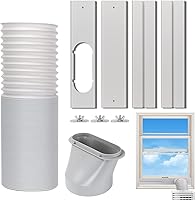
Start with the window, then choose the cooling unit. The 3 accessories below are portable AC vent kits, not air conditioners, so they help only when you already have or plan to buy a compatible portable unit.
Can a window air conditioner fit a vertical window?
Yes, a standard window AC often fits a vertically opening hung window. Its lower sash closes against the unit's mounting rail, with brackets, fasteners, and other support installed as the manual directs.
“Vertical” can also describe a tall, narrow opening. That shape does not tell you whether a standard window unit will work; the sash movement and mounting surfaces matter more.
A window that swings outward on hinges needs a different approach. Read whether an AC fits a casement window before choosing equipment for a crank-operated window.
Which vertical windows suit a window air conditioner?
A hung window is a candidate when its clear opening, frame, and sash meet the unit's requirements. The frame must be sound, and the sash must close in the position required to secure the AC.
Rotten wood, loose tracks, or an awkward storm-window frame can prevent proper installation. Resolve those problems before ordering a unit rather than planning to fill or brace around them later.
How do you measure the opening before buying?
Measure the usable opening with the sash raised, not the glass or outside frame. Record the clear width, available height, sill depth, and any obstacles where the AC or vent panel will sit.
For a window unit, compare those measurements with its minimum and maximum installation dimensions. Allow space for required side panels and check whether the window construction accepts the specified fasteners.
Look outside, too. The rear and side vents need the clearances stated in the manual, so a nearby wall, deep recess, or enclosed balcony may rule out an otherwise suitable opening.
For a portable kit, measure along the track where its panels will rest. A sideways slider usually needs the panel assembly to span the opening's height; a hung window usually needs it to span the width.
Measure the track itself as well. A panel can reach the right length yet sit poorly in a narrow, curved, or obstructed channel.
What works when your window slides sideways?
Use a unit approved for sliding windows or a portable AC with a compatible exhaust panel. Don't turn a standard window AC on its side to fit a tall opening.
A portable AC keeps the cooling unit indoors and sends exhaust through a hose. That avoids mounting the AC body in the window, but it takes floor space and still needs a secure, well-sealed vent opening.
Our guide to air conditioners for sliding windows explains that window style in more detail.
The JENCEAILL kit suits someone who needs both panels and a hose, such as a buyer replacing an incomplete portable AC vent setup. Its 4 plates adjust from 16.9 to 62.1 in, and it includes a coupler and 16 ft of sealing tape.
Check the anti-clockwise hose thread against your AC's connection. Skip this kit if the connection differs or you only need panels and can reuse a suitable hose.
Don't choose it merely because it contains more parts. A correct adapter connection matters more than having an extra hose that won't attach.
Can a portable AC kit work in a hung window?
Yes, a portable AC kit can fit a compatible hung window, with the sash closing against the vent panel. Choose the kit around your existing hose and window track rather than the AC brand alone.
The VIVOSUN kit suits buyers who already have a hose and need replacement panels with several adapter options. Its panel range is 16.9 to 61 in, and it includes 10 ft of sealing tape.
Its different adapters are useful when matching an existing connection, but they don't make every portable AC compatible. Check the hose end's shape and attachment method as well as its diameter.
Skip this kit if you need an exhaust hose included or have a casement window. VIVOSUN specifies it for hung and sliding windows, not hinged openings.
When is the JEACENT panel kit worth considering?
The JEACENT kit is an option for replacing window panels when you already have a hose and can confirm the adapter fit. It uses 4 PVC panels, lock nuts, and an adapter for 5.1 in or 5.9 in exhaust hoses.
Choose it when a removable panel assembly and a lock-at-length adjustment suit your window. Check the individual panel layout before assuming every opening below its maximum length will work.
Confirm the adapter's opening shape and attachment with the seller before ordering, because JEACENT's compatibility wording is unclear. Skip it if you cannot verify that connection or need a hose included.
None of these kits adds cooling capacity. They provide an exhaust route, so choose the portable AC itself separately for the room.
How do you choose a window air conditioner for vertical windows?
Choose by window fit first, room capacity second, and daily use third. An AC with the right cooling output still isn't suitable if you cannot mount and secure it correctly.
Use floor area as the starting point for capacity, then account for ceiling height, strong sun, and connected spaces. Our guide to what size air conditioner you need explains those adjustments.
Don't buy a much larger unit simply to cool faster. Oversizing can lead to short cooling cycles and less moisture removal, while an undersized unit may struggle to reach your chosen temperature.
Think about where the air will flow. Curtains, furniture, and a bed close to the outlet can block circulation or put a cold draft directly on someone.
Once you've confirmed the opening, compare suitable models in our best window air conditioners guide. For a broader choice, see how window, portable, and through-the-wall air conditioners differ.
How should you set up the AC or vent panel?
Follow the AC manual and window-kit instructions together. The unit's requirements govern support, hose routing, drainage, electrical connection, and outdoor clearance.
For a window AC, arrange help for lifting and fit the required mounting hardware before releasing your grip. Use the specified drainage position; adding extra tilt can interfere with the intended installation.
Our window AC installation guide covers the general sequence. Don't treat a support bracket as a substitute for securing the unit and sash as directed.
For a portable setup, assemble the panel to the measured length, lock the joints, and seat it firmly in the track. Close and secure the sash, then seal gaps around the panel without blocking the exhaust opening.
Keep the hose as short and straight as the manual allows. Avoid crushing it behind furniture, adding an unapproved extension, or placing the AC so far away that the hose pulls on the panel.
Use the electrical connection specified by the AC manufacturer. Check drainage instructions before running a portable unit, especially where an unnoticed leak could damage flooring.
What care and common mistakes matter most?
Keep the filter, air paths, and window seal clear so the AC can move air as intended. Check the filter on the schedule in the manual, especially during frequent use or dusty conditions.
Inspect the vent panel after moving the portable AC or opening the window. Loose hose ends and gaps around panel joints let exhaust or outdoor air back into the room.
Follow our guide to cleaning a window air conditioner for routine care. Disconnect power before cleaning and keep water away from electrical parts.
Avoid choosing a vent kit by its maximum length alone. Hose thread, adapter shape, panel overlap, and track fit can each stop an otherwise promising kit from working.
Don't use tape as the only means of holding a panel or AC in place. Sealing gaps and securing equipment are separate jobs, and both need attention.
Which setup should you choose for your vertical window?
Choose a window air conditioner for vertical windows when you have a suitable hung window, enough outdoor clearance, and a mounting arrangement you can complete as directed. Choose a portable AC when a compatible vent panel offers the more practical fit.
For the accessories here, pick JENCEAILL when you need a matching hose and panels together. Pick VIVOSUN when you have a compatible hose and want adapter choices; consider JEACENT only after confirming its connector shape.
Before ordering, write down your opening measurements and connection details beside the installation limits. If you're still choosing between cooling types, use our window, portable, and through-the-wall comparison to make that decision first.
Frequently asked questions
Can you install a window air conditioner in a vertical window?
Yes, a standard window AC can fit a vertically opening hung window when the unit's manual allows that installation. Measure the clear opening, check the sill and sash, and confirm the required support and outdoor clearance; a tall window alone does not guarantee compatibility.
Can a window air conditioner go in a sideways sliding window?
Only use a window air conditioner approved for a sideways sliding window and its mounting arrangement; a standard hung-window unit may not fit or attach safely. A portable AC with a matching vent panel is another option, provided the panel spans the opening and the hose connection fits.
Can a portable air conditioner vent through a vertical window?
Yes, a portable AC can vent through a compatible hung window using a fitted exhaust panel. Match the panel range, hose diameter, adapter shape, and connection direction before buying; close and secure the sash as directed, seal gaps, and keep the exhaust route within the AC manual's limits.
What if my window is too small for a window air conditioner?
Choose another cooling setup if the opening falls outside the window AC's installation limits. A portable AC may work if its vent panel fits, but a smaller panel opening still needs careful measurement; a through-the-wall unit is another option where the building and installation plans allow it.