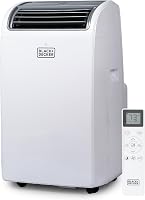
Do All Portable AC Units Need to Be Vented?
Yes, all portable AC units that cool a room need to be vented. A hose model moves heat into the exhaust air and pushes it outside, so without a vent the heat stays indoors and the unit can't cool the room.
On this page (10 sections)
- Do all portable AC units need to be vented?
- How does a vented portable AC remove heat?
- What happens if you run a portable AC without venting it?
- Which portable AC types don't need a vent?
- How do you vent a portable AC in a sliding window?
- How do you vent a portable AC in a casement or crank-out window?
- What if your window is small or oddly shaped?
- Does the vent type affect how well the AC cools?
- Can you vent a portable AC in a garage or bedroom?
- Which vent kit should you pick?
Yes, all portable AC units that cool a room need to be vented. A hose model pulls heat out of the air and sends it outside through the exhaust hose, so without a vent the heat stays indoors and the unit can't cool the room.
That single answer covers most of what people ask about portable AC venting. The rest of this guide looks at the units that do vent, the windows that make venting awkward, and the kit that solves each one.
Do all portable AC units need to be vented?
Yes, every hose-based portable air conditioner needs a vent. The unit cools by moving heat into the exhaust air, and the hose carries that air out of the room.
Block the hose and the heat has nowhere to go.
A portable AC is not a sealed system like a split unit. It sits inside the room, takes in room air, cools part of it, and dumps the collected heat into the exhaust stream.
That stream has to leave through a window, a wall opening or a door.
The only exceptions are machines sold as ventless. Evaporative coolers, often called swamp coolers, add moisture to the air and don't use a hose.
They aren't the same as a compressor portable AC, and they work best in dry climates.
How does a vented portable AC remove heat?
The hose is the heat exit. Inside the unit, the compressor and coils separate the air into a cooled stream for the room and a hot stream for the exhaust.
The hot stream goes out the hose.
This is why the hose feels warm when the unit runs. That warmth is heat pulled from your room and pushed toward the window.
A short, straight hose moves it out with less effort than a long, coiled one.
The vent also carries moisture. A portable AC pulls water from the air as it cools, and much of that water leaves as vapor in the exhaust.
When the hose ends indoors, the heat and moisture return to the same space.
What happens if you run a portable AC without venting it?
The room doesn't get cooler in any useful way. The unit removes heat from one part of the air and releases it back into the room, so the total heat stays about the same.
Some units add a little heat from the motor.
You may feel a cool breeze standing right in front of the vent. Step two feet away and the room feels much as it did.
Meanwhile the unit runs longer, uses more power and collects more water in its tank.
Some units trip a safety switch or shut down when the exhaust path is blocked. Others keep running and just fail to cool.
Either way, the hose needs an outside route.
Which portable AC types don't need a vent?
Only machines built without an exhaust hose skip venting. That means evaporative coolers and some personal spot coolers that cool just the air around them.
A compressor portable AC always vents.
An evaporative cooler pulls room air through a wet pad and blows it back cooler. It adds humidity, so it suits dry air and struggles in a muggy room.
It also needs a window or door cracked open to keep air moving.
A true ventless compressor unit doesn't exist in the usual portable AC format. If a product promises cooling without a hose, read the details closely.
It is most likely an evaporative model or a small fan.
For a room that truly can't take a vent, the practical options are a window AC, a mini-split, or an evaporative cooler in a dry climate.
How do you vent a portable AC in a sliding window?
Use a rigid window vent kit that slides to fit the opening. The panels fill the window gap, the hose connects to the panel port, and the window closes down onto the kit.
That seals most of the opening.
Measure the window width and height first. Most kits list a maximum extension and a minimum opening size.
A kit that's too short leaves a gap, and a kit that's too tall won't sit in the track.
The Kxuhivc kit is a typical sliding-window set. It has four PVC plates that slide together and lock with screws, plus a 5.9 in exhaust hose and an adaptor.
It's built for a sliding window or door.
Check the hose thread direction before you buy. The Kxuhivc hose is anti-clockwise, and that has to match your unit.
A mismatch means the hose won't screw onto the AC outlet. The kit also includes sealing tape for the gap between the fixed and sliding plates, which closes the space the panels leave behind.
How do you vent a portable AC in a casement or crank-out window?
A fabric window seal is the usual answer for non-sliding windows. It tapes to the window frame and the sash, then zips around the hose.
It flexes with the window type in a way rigid panels can't.
Casement, crank-out and push-out windows swing open rather than slide. A flat panel kit won't bridge that opening.
A seal made of fabric and hook tape will, as long as the frame is clean and smooth.
The IKSTAR seal kit is made for these windows. It fits a window perimeter up to 400CM/157 in and has an adjustable zipper for the hose.
It works with single and dual hose units.
Measure the whole window perimeter before ordering. IKSTAR sells a smaller 300CM size for perimeters up to 118 in, so pick the closest larger size.
Clean and dry the frame, apply the hook tape, press the seal on, then zip the hose in. There's no drilling, which suits renters and apartments.
Can you vent through a skylight or a door?
Yes, with the right seal. IKSTAR lists skylight windows among the types its fabric seal fits.
The same zipper and tape method applies as long as the frame is reachable.
A sliding glass door can take a rigid kit too. The Kxuhivc plates suit a sliding door as well as a window.
Check the door height against the kit's extension range first.
What if your window is small or oddly shaped?
Pick the vent kit for the window type you have, not the biggest kit. A snug fit around the hose does more for cooling than a wide panel that leaves gaps.
Measure the opening before you order.
The JEACENT kit is a sliding-window set with four panels that extend up to 60 in. It fits a window opening from 16.5 to 60 in wide and 17 to 60 in high.
The adaptor takes a 5.1 in or 5.9 in hose.
The exhaust hose isn't included, so you'll need the hose that came with your AC. It's for round hoses only, not oval openings.
The bottom panel has a joint design that helps close the seam. For a very small window, a fabric seal often fits where panels won't.
Does the vent type affect how well the AC cools?
Yes, the seal around the hose matters as much as the hose itself. A loose fit lets hot outdoor air back in, so the unit works harder for the same result.
A tight kit keeps more cooled air in the room.
Three things drive the result. The hose should be short and straight, the window gap should be closed, and the unit should sit where its exhaust can reach outside.
Any weak link cuts cooling. A fabric seal helps with backflow because it closes the open window area around the hose.
Rigid panels do the same when the foam strip and screws are fitted properly.
Placement counts too. Keep the unit away from walls and furniture so it can pull air in.
Don't drape curtains over the exhaust or block the front grille.
Can you vent a portable AC in a garage or bedroom?
Yes, in both, as long as the room has a window or door to the outside. A bedroom needs a quiet unit and a tidy vent, while a garage needs a kit that stands up to more dust and wider openings.
In a bedroom, choose a portable air conditioner for bedroom use that runs quietly. A fabric seal or a sliding kit both work; pick by window type.
A quiet portable air conditioner matters more at night than raw power.
For a garage, vent through a window or a door panel if the wall has no opening. Our guide to a portable air conditioner for garage setup covers the wider openings.
A longer hose may be needed to reach the vent. A garage with no window or door to the outside needs a different cooling plan.
Which vent kit should you pick?
Pick the kit by your window type, then check the hose size and the opening measurements. That order avoids the two common mistakes: buying a sliding kit for a crank window, or a kit whose hose won't fit the unit.
For a sliding window or door, the Kxuhivc kit covers a 5.9 in hose with four sliding plates. For casement and crank-out windows, the IKSTAR fabric seal wraps the frame and zips around the hose.
The JEACENT panels suit a sliding opening up to 60 in when you already have the hose.
If you're still choosing the unit itself, start with our roundup of the portable air conditioner options. Then match the vent kit to the window in the room you want to cool.
That pairing, not the kit alone, is what keeps the room cool.
Frequently asked questions
Can I run a portable AC without venting the hose?
You can switch a hose unit on without a vent, but it won't cool the room. The exhaust heat stays inside, so the room may get warmer.
Only units sold as ventless, such as some evaporative coolers, skip a hose.
What if my room has a casement or crank-out window?
A fabric window seal is the usual fix. It tapes around the open frame and has a zipper opening for the hose.
Sliding windows are better served by rigid panels that slide to the window width.
How much hose length does a vent kit allow?
Keep the exhaust hose short and as straight as you can. Long runs and sharp bends trap heat and cut cooling.
Most makers set a maximum hose length in the manual, so follow that figure rather than adding extensions.
Does venting let hot outdoor air back into the room?
An open window with a loose hose does. A vent kit or seal closes the gap around the hose so warm outside air can't flow back in.
That keeps more of the cooled air in the room.