8 Best Portable Air Conditioners for Bedrooms (November 2026)
The best portable air conditioners for bedrooms include the Black+Decker 10 for larger bedrooms, the Black+Decker 9 for bedtime routines, and the Midea 10 for remote scheduling.
On this page (10 sections)
- Which portable air conditioner for bedroom use stands out?
- How we chose these bedroom portable air conditioners
- Which of these bedroom ACs fits your routine?
- How do you size a portable AC for a bedroom?
- What makes a portable air conditioner workable beside a bed?
- How should you set up a portable AC in a bedroom?
- How do you keep bedroom cooling effective overnight?
- What care does a bedroom portable air conditioner need?
- Which buying mistakes should you avoid?
- Which bedroom portable air conditioner should you choose?
The Black+Decker 10,000 BTU model is our top portable air conditioner for bedroom use because its Follow Me remote lets it sense temperature near your bed. Choose Midea for phone scheduling, or the Black+Decker 8,500 BTU model when floor space is tight.
The right bedroom AC must fit your window, your cooling load, and your tolerance for compressor sound. A useful remote won't make up for a poor exhaust setup or a cabinet blocking your walkway.
If you're still choosing between types, read our guide to window, portable and through-the-wall air conditioners. For a wider range of portable options, see our best portable air conditioners.
Our picks at a glance
-
1
 Best for larger bedrooms
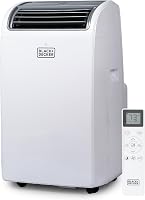
Black+Decker 10,000 BTU portable air conditioner
9.2/10 our score
See it on Amazon -
2
 Best for bedtime routines
Black+Decker 9,000 BTU portable air conditioner
8.5/10 our score
See it on Amazon -
3
 Best for remote scheduling
Midea 10,000 BTU portable air conditioner
7.7/10 our score
See it on Amazon
- 4
 Check it
Black+Decker 8,500 BTU portable air conditioner
Best for tight bedrooms - 5
 Check it
SereneLife 8,000 BTU 3-in-1 portable air conditioner
Best for smaller guest rooms - 6
 Check it
Black+Decker 7,500 BTU portable air conditioner
Best for light-sensitive sleepers - 7
 Check it
SereneLife 8,000 BTU portable air conditioner
Best for spare bedrooms - 8
 Check it
SereneLife 8,000 BTU dual motor portable air conditioner
Best for manual-control households
Which portable air conditioner for bedroom use stands out?
The top Black+Decker suits bedrooms where remote temperature sensing matters, while Midea is the clear choice here for app scheduling. Smaller cabinets and bedtime controls give the other models specific reasons to stay on your shortlist.
Use the comparison below to narrow the field, then read the individual advice before deciding. Room coverage claims vary between brands, so don't rank cooling strength by square footage alone.
Black+Decker 10,000 BTU portable air conditioner: Best for larger bedrooms
- 10,000 BTU ASHRAE, 5,550 BTU DOE
- Rooms up to 450 sq ft
- Follow Me remote
- Cooling, dehumidifier, and fan modes
The Follow Me remote lets temperature sensing happen near your bed. Choose this model when bedroom coverage and remote temperature control matter more than a narrow cabinet.
Pros
- Remote acts as a thermostat
- Washable filter
- Casters and side handles
Cons
- 48.6 lb unit weight
- Larger footprint than the compact picks
Black+Decker 9,000 BTU portable air conditioner: Best for bedtime routines
- 9,000 BTU ASHRAE, 5,300 BTU SACC
- Rooms up to 400 sq ft
- Follow Me remote
- Sleep Mode and 24-hour timer
Sleep Mode, a timer, and remote temperature sensing suit a regular bedtime schedule. It takes the same floor area as the top pick, so choose it for its controls rather than space savings.
Pros
- Follow Me remote
- Sleep Mode and timer
- Three fan levels
Cons
- Window venting is required
- 45.3 lb unit weight
Midea 10,000 BTU portable air conditioner: Best for remote scheduling
- 10,000 BTU ASHRAE, 7,100 BTU SACC
- Rooms up to 300 sq ft
- App, remote, and voice control
- 24-hour adjustable timer
Use the SmartHome app to change modes and set schedules, with Alexa and Google Assistant support for voice commands. Its included window brackets fit openings from 26.5 to 48 inches.
Pros
- App scheduling
- Remote and voice control options
- Washable filter
Cons
- Coverage guidance stops at 300 sq ft
- Midea recommends weekly filter cleaning
Black+Decker 8,500 BTU portable air conditioner: Best for tight bedrooms
- 8,500 BTU ASHRAE, 5,100 BTU SACC
- Rooms up to 350 sq ft
- Three modes
- Remote control
A narrow cabinet makes this a useful option beside bedroom furniture. Its full-function remote and manually adjustable outlet let you manage cooling without reaching the top panel.
Pros
- Compact footprint
- Remote controls all functions
- 24-hour timer
Cons
- Window panels fit openings from 20.5 to 39 inches
- Remote batteries are not included
SereneLife 8,000 BTU 3-in-1 portable air conditioner: Best for smaller guest rooms
- 8,000 BTU cooling
- Cooling, dehumidifier, and fan modes
- Three fan speeds
- Remote with sleep key
Three fan speeds and a remote with a sleep key give guests several comfort settings. SereneLife gives conflicting room coverage figures, so keep this model on a small-room shortlist.
Pros
- Sleep key on remote
- Three fan speeds
- Window kit and drain pipe included
Cons
- Coverage guidance varies between 215+ and 350 sq ft
- 49 lb unit weight
Black+Decker 7,500 BTU portable air conditioner: Best for light-sensitive sleepers
- Three operating modes
- Remote can switch LED display off
- Auto water evaporation feature
- Includes window kit
The remote can switch off the unit's LED display, a useful detail in a dark bedroom. Sleep Mode, a timer, and auto water evaporation add practical overnight controls.
Pros
- Remote display control
- Auto air swing louvers
- Auto water evaporation feature
Cons
- Dimensions differ across descriptions; confirm fit
- Remote batteries are not included
SereneLife 8,000 BTU portable air conditioner: Best for spare bedrooms
- 8,000 BTU ASHRAE
- Rooms up to 300 sq ft
- 54 dBA operating noise
- Remote and washable pre-filter
A compact cabinet, remote, and washable pre-filter suit a spare bedroom with occasional cooling needs. The 24-hour timer lets you plan a cooling period before guests arrive.
Pros
- Washable pre-filter
- 24-hour timer
- Window vent kit included
Cons
- Two fan speeds
- 47 lb unit weight
SereneLife 8,000 BTU dual motor portable air conditioner: Best for manual-control households
- 8,000 BTU cooling
- Cooling, dehumidifier, and fan modes
- Remote with sleep key
- Rolling wheels
Panel and remote controls suit households that prefer buttons to phone controls. Choose it for a smaller bedroom where its three fan speeds are useful and compressor sound is acceptable.
Pros
- Remote includes a sleep key
- Three operating modes
- Rolling wheels
Cons
- Coverage guidance varies between 215+ and 350 sq ft
- SereneLife gives operating noise of 55–57 dBA
| Product | Best for | Cooling capacity | Room size | Controls | Our score |
|---|---|---|---|---|---|
| Black+Decker 10,000 BTU portable air conditioner | larger bedrooms | 10,000 BTU ASHRAE, 5,550 BTU DOE | Up to 450 sq ft | Remote with Follow Me function | 9.2 |
| Black+Decker 9,000 BTU portable air conditioner | bedtime routines | 9,000 BTU ASHRAE, 5,300 BTU SACC | Up to 400 sq ft | Remote with Follow Me function | 8.5 |
| Midea 10,000 BTU portable air conditioner | remote scheduling | 10,000 BTU ASHRAE, 7,100 BTU SACC | Up to 300 sq ft | App, remote, or voice control | 7.7 |
| Black+Decker 8,500 BTU portable air conditioner | tight bedrooms | 8,500 BTU ASHRAE, 5,100 BTU SACC | Up to 350 sq ft | 7.3 | |
| SereneLife 8,000 BTU 3-in-1 portable air conditioner | smaller guest rooms | 8,000 BTU | Digital panel and remote | 7.1 | |
| Black+Decker 7,500 BTU portable air conditioner | light-sensitive sleepers | 5,000 BTU SACC | Up to 350 sq ft | Full-function remote | 6.9 |
| SereneLife 8,000 BTU portable air conditioner | spare bedrooms | 8,000 BTU ASHRAE | Up to 300 sq ft | 6.8 | |
| SereneLife 8,000 BTU dual motor portable air conditioner | manual-control households | 8,000 BTU | Digital panel and remote | 6.7 |
How we chose these bedroom portable air conditioners
We compared cooling capacity, room guidance, overnight controls, cabinet size, and vent setup for bedroom use. Noise figures helped identify trade-offs, but they don't support a firm quietest-to-loudest ranking without matching measurement conditions.
Temperature sensing near the sleeper earns the top two Black+Decker models their places. Midea offers the most flexible scheduling, while the compact Black+Decker addresses the practical problem of fitting an AC beside bedroom furniture.
We also flag conflicting coverage or size information where it changes the decision. None of these picks should be chosen on a broad room claim without checking the space and installation.
Which of these bedroom ACs fits your routine?
Choose by the problem you need to solve first: uneven comfort near the bed, a hot room before bedtime, limited floor space, or distracting display light. The product notes below explain who benefits from each model and who should move on.
Black+Decker 10,000 BTU: for temperature sensing near the bed
The top pick suits someone who wants temperature control near where they sleep. Its Follow Me remote acts as a thermostat, which is useful when the air beside the AC feels different from the air across the room.
Keep the remote in a representative spot near the bed, following the operating instructions. A sunny windowsill, warm lamp, or direct stream of cold air can make that spot a poor guide to bedroom comfort.
Black+Decker recommends this model for rooms up to 450 sq ft, but that ceiling isn't a promise for every room. A sun-soaked upstairs bedroom may need a different capacity choice from a shaded room of the same size.
Skip this model if a narrow placement gap is your main concern. Its 15.3 by 14-inch footprint needs room around it for airflow, the hose, and filter access.
Black+Decker 9,000 BTU: for a regular bedtime schedule
This model suits a bedroom with a predictable evening routine. Sleep Mode and the 24-hour timer let you plan operation, while Follow Me offers the same useful remote-sensing approach as the top pick.
Use the timer to start cooling before you settle down rather than waiting until the room and bedding feel hot. Read how Sleep Mode changes temperature before using it overnight, especially if you prefer a steady setting.
The cabinet takes the same floor area as the first Black+Decker, so moving down to this model doesn't solve a tight-space problem. Its lower weight still leaves a substantial appliance to lift over stairs or thresholds.
Skip it if phone control is central to your routine, since Midea is the app-enabled choice here. Also compare its capacity with the top model if your bedroom sits near the upper end of Black+Decker's room guidance.
Midea 10,000 BTU: for cooling before you come home
Midea suits someone whose bedroom gets hot while they're away and who wants app schedules or remote mode changes. SmartHome support, plus Alexa and Google Assistant compatibility, gives it a clear role beyond bedside button control.
It also has the highest stated SACC capacity among the models with that figure here, at 7,100 BTU. Midea still recommends it for up to 300 sq ft, which shows why coverage claims and capacity need separate attention.
Check the window before focusing on smart features. Its brackets fit openings from 26.5 to 48 inches, and the included exhaust hose is 5 ft long.
Skip Midea if its bracket range doesn't suit your opening or you won't use connected controls. It includes a conventional remote, but that alone doesn't make it the most useful choice for a buyer who wants only basic operation.
Black+Decker 8,500 BTU: for limited floor space
This Black+Decker is the strongest fit here when cabinet width and depth limit placement. Its 11.4-inch width and 11.02-inch depth give you more options around a dresser, desk, or bedside walkway than the top two cabinets.
Mark out the full installation area before ordering. The cabinet footprint excludes the hose bend, required clearances, and the space you need to remove the washable filter.
Its window panels fit openings from 20.5 to 39 inches, so it deserves particular attention if Midea's bracket range starts too wide for your opening. Window style and panel orientation still need to match the instructions.
Skip it if your room needs more cooling capacity rather than a smaller cabinet. The full-function remote and timer are useful, but they don't replace enough cooling output for a hot, difficult room.
SereneLife 8,000 BTU 3-in-1: for a smaller guest room
This SereneLife suits a smaller guest room with straightforward controls. Three fan speeds let guests adjust airflow, and the remote includes a sleep key so they don't need to reach the unit after getting into bed.
The important limit is room sizing. SereneLife gives both 215+ and 350 sq ft coverage figures, so don't choose it for a room near the larger figure without confirming suitability with the brand.
The included exhaust hose, window plate, and drain pipe cover the main setup parts. Check their fit before guests arrive, then show them which control changes the mode and which changes the temperature.
Skip it for a large, sunny bedroom or a sleeper who needs very little mechanical sound. SereneLife gives an operating range of 55–57 dBA, so this isn't a pick to choose on an expectation of near-silent operation.
Black+Decker 7,500 BTU: for a darker bedroom
This model's strongest bedroom detail is remote control of the LED display. If appliance lights catch your attention at night, being able to switch the display off is more useful than another control you rarely touch.
It also includes Sleep Mode, a timer, and automatic up-and-down air swing. Those features suit someone who wants to set the room up before bed and avoid getting up to redirect airflow.
Auto water evaporation helps limit draining, but it doesn't remove the need to understand the drain instructions. Humid conditions and the selected mode can change how you need to manage collected water.
Skip it for a tightly measured alcove until you confirm the exact cabinet dimensions. Size descriptions differ, and the headline BTU wording also varies; use its 5,000 BTU SACC figure for a like-for-like capacity comparison.
SereneLife 8,000 BTU: for an occasional-use bedroom
This black SereneLife suits a spare bedroom that needs its own cooling setup. The remote, 24-hour timer, and washable pre-filter cover routine operation without making phone controls part of the process.
Its cabinet measures 11.8 inches wide and deep, making it worth considering where a broader unit would crowd furniture. Required clearance and hose space still belong in your floor plan.
SereneLife recommends it for rooms up to 300 sq ft and gives an operating sound figure of 54 dBA. That figure is useful context, but it isn't enough to call it a quieter bedroom choice than models measured under unknown conditions.
Skip it if you want three fan speeds or remote temperature sensing. It has two fan speeds, and the stronger reasons to choose it are its cabinet shape and simple control arrangement.
SereneLife 8,000 BTU dual motor: for button-based controls
This SereneLife suits someone who prefers a digital panel and a conventional remote. Three fan speeds, mode controls, and a sleep key give you the main adjustments without a phone.
Its dual motor name shouldn't drive the purchase. Dual motor doesn't mean dual hose, so it isn't a reason to assume the exhaust arrangement works like a dual-hose portable AC.
As with the other white SereneLife above, room guidance ranges from 215+ to 350 sq ft. Keep it on a smaller-bedroom shortlist and resolve that sizing question before choosing it for a demanding space.
Skip it if quiet sleep is the main goal or you need a clear capacity comparison using SACC. Its stated sound range is 55–57 dBA, and there isn't a SACC figure here to compare with the Black+Decker and Midea options.
How do you size a portable AC for a bedroom?
Start with room area and a comparable cooling-capacity figure, then account for heat from sun, ceilings, and adjoining spaces. A manufacturer's maximum room area is a starting point rather than a complete sizing calculation.
Measure the bedroom you will actually cool
Multiply the room's length by its width to find floor area. For an irregular room, split it into rectangles and add their areas.
Decide whether the door will stay closed during use. An open doorway adds a cooling load beyond the bedroom, so don't size for one room while expecting the AC to cool a hallway too.
Strong afternoon sun, poor insulation, and high ceilings can make a room harder to cool. Our air conditioner size guide explains the room factors to check before settling on capacity.
Compare bedroom portable air conditioner capacity fairly
Compare SACC with SACC, rather than matching a headline ASHRAE figure against a lower adjusted number. SACC accounts for portable AC operating effects that the larger headline number doesn't capture in the same way.
A small difference in advertised BTU isn't a good reason to ignore window fit or noise needs. Likewise, choosing the largest unit without sizing the room can lead to short cooling cycles and less useful moisture removal.
The top Black+Decker has batch-dependent DOE figures, so packaging may show a different adjusted number. Our portable AC selection guide explains capacity labels and how to use them.
What makes a portable air conditioner workable beside a bed?
A bedroom portable AC needs an acceptable sound pattern, sensible airflow, and controls you can use in the dark. Those details decide whether you'll be comfortable using it through the night.
Consider compressor cycling as well as fan sound
The compressor and fan sit inside the bedroom, so you'll hear mechanical operation nearby. A steady fan sound may bother you less than a compressor starting and stopping, even when the average sound level seems acceptable.
Published decibel figures are most useful when the measurement distance, mode, and fan setting match. Don't assume a difference of a few decibels between unrelated descriptions settles the choice.
Sleep Mode usually changes operating behavior or temperature settings; it doesn't promise silent cooling. If this is your main concern, compare the options in our quiet portable air conditioner guide.
Aim airflow across the room
Direct cold air into open space rather than at curtains, bedding, or the side of a dresser. Clear airflow helps the cooled air spread instead of staying close to the unit.
Avoid a position that puts the outlet straight at your face all night. Adjust the louvers or furniture placement while keeping the hose route and required clearances within the instructions.
A remote is useful only if you can find it. Give it a stable bedside spot, and keep a temperature-sensing remote away from unusual heat or cold.
How should you set up a portable AC in a bedroom?
Set the unit near a compatible outdoor vent opening and suitable wall outlet, then seal the window panel carefully. The best installation keeps the hose route simple without crowding the air intake.
- Measure the actual window opening. Check the opening direction and usable panel space, rather than measuring only the glass.
- Plan the cabinet position. Leave the clearance required by the manual and enough access to clean the filter and reach the drain.
- Fit and secure the window panel. Use the required seals and fasteners so hot outdoor air doesn't flow around the insert.
- Connect the exhaust hose. Keep it within the allowed length and shape, avoiding crushing, sharp bends, or an improvised extension.
- Check power and drainage. Follow the electrical instructions and learn where water will go before starting cooling.
Plug the unit directly into the appropriate grounded wall outlet as instructed. Don't use an extension cord or power strip to reach a more convenient corner.
Keep curtains from covering either end of the airflow path. Also make sure the installation leaves a clear walking route and doesn't block a needed exit.
A window kit isn't automatically suitable for a crank-out or unusual opening. A secure, sealed panel made for that opening may be needed before the AC has a workable place to vent.
Don't send exhaust into a closet, hallway, or another room. That moves the heat indoors instead of removing it from the home.
If you move the unit, follow its transport and upright-rest instructions before restarting it. Wheels help across a clear floor, but they don't turn a heavy appliance into an easy stair carry.
How do you keep bedroom cooling effective overnight?
Keep heat out, start cooling early, and maintain clear airflow before lowering the thermostat further. Those steps address the room's cooling load instead of asking the AC to overcome avoidable heat.
Close blinds before strong sun reaches the glass. Keep the bedroom door and other windows closed during cooling so the unit isn't continually handling warm air from elsewhere.
Start a cooling period before bedtime if the room has been heating up all day. A timer or app schedule is useful for this purpose, especially when you want less activity around the unit after lights out.
Choose a temperature you can maintain comfortably rather than the lowest available setting. A very low target generally extends cooling operation; it doesn't make the unit's cooling capacity larger.
Fan-only mode circulates air without active refrigeration. Dry mode focuses on moisture removal and may have different venting or drainage instructions, so don't treat the three modes as interchangeable.
What care does a bedroom portable air conditioner need?
Clean the filter, keep the exhaust path clear, and manage water as instructed to maintain useful airflow. These are simple jobs, but a bedroom cabinet can collect dust and lint quickly.
Check the filter on the schedule in the manual, with closer attention around pets or dusty bedding. Midea recommends cleaning its filter every week of operation.
Switch off and unplug the appliance before the maintenance steps that require it. Wash only parts designed for washing, and let the filter dry fully before putting it back.
Check the hose connections and window seals when cooling seems weaker than usual. A loose connection can release hot exhaust air into the same room you're trying to cool.
Learn the full-tank indication and drain procedure before a humid night. Self-evaporating operation can reduce water handling, but it doesn't mean every mode and humidity level will be drain-free.
Before seasonal storage, drain and dry the unit as directed, clean the filter, and keep the hose parts together. Store it in the position required by the manual so setup is easier next season.
Which buying mistakes should you avoid?
The biggest mistakes are buying for an inflated room expectation and leaving vent fit until delivery. A smaller, properly installed unit can be a more useful purchase than one you can't position correctly.
Don't buy on the largest headline BTU number alone. Capacity standards, heat load, and installation losses all matter to the cooling you'll get.
Don't assume portable means vent-free or easy to carry. These units need an outdoor exhaust route, and even the smaller models are substantial appliances.
Don't mistake dual motor for dual hose. Our one hose vs dual hose portable AC guide explains the difference in air paths and why it matters.
Don't ignore the space behind the cabinet. A unit that fits between furniture on paper may leave no room for a safe hose bend or filter removal.
Finally, don't choose on a sleep label alone. Check what the control does, whether the display can be managed, and whether you'll accept compressor sound in the bedroom.
Which bedroom portable air conditioner should you choose?
Choose your portable air conditioner for bedroom comfort by checking window fit first, cooling needs second, and bedtime controls third. That order rules out unsuitable units before extra features distract from the basics.
Pick the top Black+Decker 10,000 BTU when remote temperature sensing and its room guidance fit your bedroom. Choose the 9,000 BTU model when Sleep Mode and a regular timer routine are the stronger draw.
Choose Midea if you want to schedule cooling from your phone. Pick the Black+Decker 8,500 BTU when cabinet space is the limiting factor, or consider the 7,500 BTU model if display light is a particular concern.
Keep the SereneLife options for bedrooms that fit their controls, sound expectations, and sizing guidance. Before ordering any pick, use our portable AC selection guide to check capacity and vent requirements against your measurements.
Our top 3 picks at a glance
-
1
Best for larger bedrooms
Black+Decker 10,000 BTU portable air conditioner
9.2/10 our score
See it on Amazon -
2
Best for bedtime routines
Black+Decker 9,000 BTU portable air conditioner
8.5/10 our score
See it on Amazon -
3
Best for remote scheduling
Midea 10,000 BTU portable air conditioner
7.7/10 our score
See it on Amazon
Frequently asked questions
What size portable air conditioner do I need for a bedroom?
Measure your bedroom's floor area, then choose capacity using the manufacturer's room guidance and the unit's SACC figure where available. Strong sun, high ceilings, and poor insulation can raise cooling needs.
Size for the space you will keep closed off, rather than expecting one bedroom unit to cool adjoining rooms.
Are portable air conditioners quiet enough for bedrooms?
Portable air conditioners can suit bedrooms, but their compressor and fan remain inside the room. Light sleepers should weigh compressor cycling and changes in sound alongside any published decibel figure.
Sleep Mode changes controls or temperature behavior; it doesn't promise silence, and fan-only operation doesn't provide active cooling.
Do portable air conditioners need a window?
These picks include window vent kits and need a suitable route for hot exhaust air to leave the room. Match the panel size and window style before buying.
For other openings, see our guides to casement window air conditioners and sliding window air conditioners.
Is a portable air conditioner better than a window unit for a bedroom?
A portable unit suits a bedroom where you can spare floor space and need a removable vent setup. A window unit frees that floor space and can offer a different noise experience because of its installation.
Our portable vs window air conditioner comparison explains which arrangement fits your room.