GE vs Frigidaire Window Air Conditioner: Which Is Better? (November 2026)
For a GE vs Frigidaire window air conditioner choice, pick GE for simple dial operation or Frigidaire when its longer cord solves your outlet reach. Choose the electronic GE for a larger room or remote control.
On this page (10 sections)
- GE vs Frigidaire window air conditioner: which is better?
- How do their cooling capacity and room coverage compare?
- Who should buy the basic GE, and who should skip it?
- Who should buy the Frigidaire, and who should skip it?
- Which model is quieter?
- What controls and daily features will you actually use?
- What should you check before installing either brand?
- How should you clean and care for these units?
- Which common buying and use mistakes should you avoid?
- Which GE vs Frigidaire window air conditioner should you choose?
For a GE vs Frigidaire window air conditioner choice, buy the basic GE if you want simple dial operation, or Frigidaire if its longer cord solves your outlet reach. Choose the electronic GE when you need more room coverage or remote control.
The 2 smaller units serve the same room-size category, so neither brand wins on cooling capacity here. Your window, outlet position and daily routine give you more useful reasons to choose.
This comparison covers specific models, not every air conditioner either brand makes. A feature on the electronic GE should not be assumed to come with the basic GE.


GE vs Frigidaire window air conditioner: which is better?
The basic GE suits dial-control fans, while Frigidaire suits a small room where cord reach matters. The electronic GE serves a different buyer: someone with a larger room or a need for remote adjustments.
Start with 3 checks before choosing a brand:
- Room: Is the unit sized for the space you will actually close off and cool?
- Window: Does the opening meet the exact model's installation requirements?
- Outlet: Can the factory cord reach a suitable outlet without an extension?
A unit that passes all 3 checks is a stronger choice than one with an appealing extra feature but a poor fit. Only then should noise and control preferences decide between suitable options.
Avoid treating these as whole-home cooling systems. Air has to move through the space, and a small unit in one bedroom cannot be expected to cool rooms around corners.
If you're still deciding which format your home can accommodate, see our guide to window, portable and through-the-wall air conditioners.
How do their cooling capacity and room coverage compare?
The 5,000 BTU GE and Frigidaire both cover up to 150 sq ft, while the 6,000 BTU GE covers up to 250 sq ft. Choose the capacity your room needs before deciding which controls you prefer.
Measure length and width, then multiply them to find floor area. A 10-by-12-foot room is 120 sq ft, but that number is only the starting point.
Strong afternoon sun, a hot top floor, high ceilings and heat-producing equipment can increase cooling demand. An open doorway also adds space beyond the room you measured.
Our guide to choosing the right air conditioner size helps you account for those conditions. A room near a coverage limit deserves more care than a smaller, shaded room.
Do not buy extra capacity simply because it sounds safer. An oversized conventional unit can cool the air quickly and cycle off before removing enough moisture, leaving the room cool but clammy.
GE vs Frigidaire window air conditioners for larger rooms
The electronic GE is the relevant option here for a larger room, provided its capacity matches the room's heat load. It also suits someone who wants a repeatable temperature setting rather than a numbered dial position.
Its digital thermostat spans 64°F to 86°F, and the included remote lets you change settings from across the room. Two-way air direction helps you aim the airflow where it can circulate.
Skip this model if you need Wi-Fi or smart-home control. Its remote works for adjustments in the room, while the timer handles planned on and off times.
For a room beyond its coverage, move to a properly sized option rather than expecting a lower thermostat setting to make up the difference.
Who should buy the basic GE, and who should skip it?
Buy the basic GE for simple adjustments at the unit, especially if you dislike menus, apps or digital beeps. Its mechanical controls give you 10 temperature settings, 2 cooling modes and 2 fan speeds.
That approach suits a home office where the window is within reach or a bedroom where you tend to leave the same setting in place. You can establish a comfortable dial position without managing a connected device.
The trade-off is precision: a numbered position does not tell you the exact room temperature you selected. Make one adjustment, give the room time to respond and then decide whether another change is needed.
Skip it if reaching the controls would be awkward or you often change settings from bed. The electronic GE is the more useful option here for that routine.
GE also includes auto restart, so the unit can resume its settings after a power outage. That is useful for interruptions, but it does not replace checking the room after an outage.
Who should buy the Frigidaire, and who should skip it?
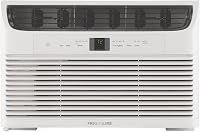
Buy the Frigidaire when its cord makes a suitable outlet reachable, or when you want straightforward temperature control for a small, closed room. Its 78-inch three-prong cord is a practical reason to choose it.
Measure the actual cord route before buying. A straight line from the window to an outlet can overlook furniture, a corner or the space needed to keep the plug accessible.
Keep the cord clear of rugs, pinch points and walking routes. Extra length is useful only when it allows a safe connection without stretching the cord.
Frigidaire's temperature control helps maintain your preset temperature, and its 2 fan speeds let you adjust airflow. Its auto restart restores previous settings when power returns.
Skip it if the outlet still falls outside the usable cord route or your window does not meet its mounting requirements. Adjustable side panels cannot solve an unsuitable sill, unsupported cabinet or incompatible window style.
Do not choose it solely because its noise figure sounds low. The available figures need a closer comparison before they can guide a bedroom purchase.
Which model is quieter?
There is no clear noise winner across all settings. Frigidaire specifies 52 dBA, while both GE models specify 52 dBA on low and 56 dBA on high.
Frigidaire's figure is not tied to a particular fan speed, so it does not show how the units compare at every setting. The basic GE's lack of digital beeps may still matter if control sounds bother you.
For sleep or desk work, consider the character of the sound as well as the number. Steady fan noise, compressor cycling and a vibrating window frame can affect comfort in different ways.
A secure installation helps prevent loose panels and hardware from adding rattles. Follow the mounting instructions rather than wedging loose objects around the cabinet.
Keep curtains and bedding away from the airflow path so you can use the fan setting that feels comfortable. Blocking the outlet makes air distribution worse without solving the noise issue.
If sound is your main buying concern, compare the options in our guide to which window air conditioners are quietest.
What controls and daily features will you actually use?
Choose controls around when and where you make adjustments. Direct dials suit a steady routine, while a remote and timer help when reaching the window is inconvenient.
The electronic GE's 24-hour timer can support a planned cooling schedule. Check the manual's timer steps so you understand when the unit will start or stop.
Its Eco mode cycles the compressor to help manage energy use while maintaining the set temperature. Expect cycling to be part of that mode rather than assuming the unit must run continuously.
A lower setpoint does not increase an air conditioner's cooling capacity. Choose a comfortable target and allow time for the walls, furniture and room air to cool.
Close the door to the room you intend to cool and reduce direct sun with shades when practical. Keep furniture from blocking the front intake or the path of cooled air.
Neither smaller model needs complicated filter care: both have washable filters. The electronic GE adds a filter reminder, but the filter still needs inspection based on your room's dust level.
What should you check before installing either brand?
Confirm the window opening, mounting method and electrical connection before lifting the unit. A cabinet that fits through the opening still needs the correct support and room for its side panels.
Both GE models require a double-hung window 27.125 to 36 in wide and at least 13.375 in high. They include EZ Mount kits, and the basic GE also includes foam insulation.
Measure the clear opening rather than the outside window trim. Check the sill's condition and make sure the sash and frame can accept the mounting hardware as directed.
For Frigidaire, confirm the exact opening requirements in its installation instructions. Its adjustable panels help close the approved gaps beside the cabinet; they do not guarantee compatibility with every window.
Use a suitable grounded outlet and follow the manual's circuit requirements. Do not use an extension cord or power strip to make an inconvenient outlet work.
Plan the lift before you begin, and get help if you cannot safely control the cabinet. Do not leave the unit balanced in the opening while searching for screws or tools.
Follow the model's instructions for cabinet position and drainage. Improvised tilt, blocked drain paths or extra holes can create problems rather than improve water handling.
Our guides to installing a window air conditioner and whether a window AC needs a support bracket explain the preparation in more detail.
How should you clean and care for these units?
Keep the filter clean and the airflow paths clear to help the unit maintain its cooling performance. Switch off and unplug the air conditioner before routine cleaning, following its manual.
Inspect the filter regularly during heavy use, especially in a dusty room. Clean it as directed and let it dry fully before reinstalling it.
Use the manual's cleaning method for the cabinet and accessible surfaces. Avoid spraying water into controls or reaching into fins and internal parts.
Check the outdoor side for leaves or other obstructions when you can do so safely. Clear airflow around the exterior matters just as much as keeping curtains away from the indoor side.
The basic GE does not need manual draining under normal conditions. If water enters the room, check installation and drainage guidance rather than treating indoor leakage as routine.
A clean filter will not correct an undersized unit or an open room layout. If cooling weakens, check the settings, airflow and room conditions before assuming the equipment needs replacement.
For a practical cleaning sequence, see how to clean a window air conditioner.
Which common buying and use mistakes should you avoid?
Avoid choosing by brand alone or buying before measuring. These mistakes can leave you with the wrong capacity, an unusable window fit or controls that do not suit your day.
Do not use cord length as a substitute for checking the outlet. Reach, grounding and the required electrical supply all have to work together.
Do not assume matching BTU figures mean identical operation. The smaller models share a capacity class, but their controls and installation details still affect your choice.
Avoid changing the thermostat every few minutes. Give the room time to respond, then adjust based on comfort rather than chasing an immediate change at the vent.
Do not judge energy use only by input wattage. The smaller GE uses 440W and the Frigidaire uses 450W, but hours of operation, cycling, room heat and your electricity rate also shape the bill.
Use our guide to window air conditioner running costs to estimate your own use. A suitable capacity, sealed installation and sensible schedule matter more than treating that small wattage difference as the deciding feature.
Which GE vs Frigidaire window air conditioner should you choose?
For your GE vs Frigidaire window air conditioner decision, eliminate any model that fails the room, window or outlet checks first. Then choose the controls that fit how you will use it.
- Choose the basic GE for a small room where accessible dials and beep-free adjustments matter.
- Choose Frigidaire when its longer cord solves a real outlet-reach problem and its window requirements work.
- Choose the electronic GE when the room needs its larger capacity or you want a remote, timer and digital temperature setting.
- Choose another model if you need more capacity, smart-home control or a different window format.
For a closer look at the smaller units, read our Frigidaire 5,000 BTU window air conditioner review or GE 5,000 BTU window air conditioner review.
If none passes your fit checks, use our best window air conditioners guide to find a model that matches the room before comparing extra features.
Frequently asked questions
Is GE or Frigidaire better for a small bedroom?
Choose the basic GE if you prefer mechanical dials, or Frigidaire if its longer cord suits your outlet position; both smaller models fit the same room-size category. Before choosing, check window compatibility, keep the airflow clear and consider whether you want to adjust settings without leaving bed.
Are the GE and Frigidaire 5,000 BTU models the same size?
No, matching cooling capacity does not guarantee matching cabinet dimensions or window requirements; measure the clear opening, check the sill and compare the installation instructions for the exact model. Side panels fill approved gaps around the cabinet; they do not make every window suitable for a window air conditioner.
Which window air conditioner is quieter, GE or Frigidaire?
There is no clear noise winner across all operating settings; Frigidaire specifies 52 dBA, while the smaller GE specifies 52 dBA on low and 56 dBA on high. Frigidaire's figure is not tied to a fan speed, so it cannot support a direct comparison at both GE settings.
Do GE and Frigidaire window air conditioners need the same window?
Do not assume they fit the same opening; both GE models here require double-hung windows 27.125 to 36 in wide, with a minimum opening height of 13.375 in. Frigidaire has adjustable side panels, but you should confirm its required opening and mounting instructions before committing to that model.
Should I choose a 5,000 or 6,000 BTU GE window air conditioner?
Choose capacity by the room's cooling needs first, then compare controls; the smaller GE covers up to 150 sq ft, while the electronic model covers up to 250 sq ft and adds a remote and timer. Use our air conditioner sizing guide to account for room conditions beyond floor area.