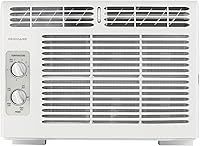
GE 5,000 BTU Window Air Conditioner Review: Worth It? (November 2026)
The GE 5,000 BTU window air conditioner is a good fit for rooms up to 150 sq ft when you want simple mechanical controls. Choose the larger GE for a remote and timer, or the LG if you need a narrower double-hung window fit.
On this page (8 sections)
- Is the GE 5,000 BTU window air conditioner a good fit?
- How does this GE compare with the alternatives?
- How do you choose the right cooling capacity?
- What should you measure before installation?
- Is this GE quiet enough for a bedroom?
- How should you use and care for this GE?
- How much electricity will the GE use?
- Which GE window air conditioner should you choose?
The GE 5,000 BTU window air conditioner is a good choice for a small room if you want mechanical dials and don't need a remote. Buy it only after checking room size and window fit, since both matter more than brand preference.
Its main appeal is simple daily use: adjust cooling at the unit, wash the filter when needed and let auto restart restore settings after a power outage. The alternatives below serve different needs, including a larger room, remote control or a narrower window.
Is the GE 5,000 BTU window air conditioner a good fit?
This GE suits a bedroom, home office or dorm room up to 150 sq ft with a compatible double-hung window. Skip it for a larger shared space or if reaching the controls would be awkward.
GE 5,000 BTU window air conditioner: Best for dial control users

- 5,000 BTU
- Up to 150 sq ft
- Mechanical controls
- Washable filter
A small-room GE for people who want to adjust cooling at the unit without a remote or app. Its window requirements are the first thing to check.
Pros
- 10 temperature settings
- 2 cooling modes and 2 fan speeds
- Auto restart after power outages
- No manual draining under normal conditions
Cons
- No Wi-Fi control
- Requires a double-hung window within the stated dimensions
Why choose this GE window air conditioner?
Choose it for direct control without app setup. The mechanical dials offer 10 temperature settings, plus 2 cooling modes and 2 fan speeds, with no digital beeps.
Those temperature settings are dial positions rather than a display showing an exact room temperature. Start near the middle, allow the room to settle and adjust a little at a time instead of moving between extremes.
This approach works well in a room where you can easily reach the window. It is less convenient behind a desk or beside a bed where you would rather change settings without getting up.
The washable filter also keeps routine care straightforward. GE says no manual draining is needed under normal conditions, though correct installation still matters for water management.
Who should skip the basic GE?
Skip it if you need a remote, timer or digital temperature setting. The electronic GE below is a better match for those needs.
Also pass if your window opens sideways or swings outward. A compact cabinet does not make a standard double-hung installation suitable for another window style.
How does this GE compare with the alternatives?
Choose among these models by room size first, window fit second and controls third. The larger GE offers a clear change in capacity and convenience, while the Frigidaire and LG are alternatives for small rooms.
GE electronic: for a larger room and remote adjustments
The GE 6,000 BTU electronic model covers up to 250 sq ft. It suits a larger bedroom or office where the basic GE's coverage falls short.
Its digital thermostat lets you select temperatures from 64°F to 86°F, and the included remote lets you change settings from across the room. A 24-hour timer helps you plan cooling around work or bedtime.
Energy Saver mode cycles the compressor to maintain the set temperature, and a filter reminder helps prompt routine cleaning. These features suit someone who wants more control over when and how the unit runs.
Skip it if you need phone control, since it has no Wi-Fi connection. Don't choose the extra capacity simply because it sounds better for a much smaller room.
Frigidaire: for a small bedroom with simple daily needs
The Frigidaire offers the same cooling capacity and room coverage as the basic GE. Its Effortless Temperature Control, 2 fan speeds and auto restart make it a direct alternative for a small bedroom.
Its washable filter and adjustable side panels address familiar window-unit needs without adding app setup. The 78-inch, 3-prong cord may help with outlet placement, but measure the route before deciding.
Choose it if those features suit your room, then confirm the exact window requirements in its manual. Skip it if you need more cooling coverage or have already ruled out a standard window installation.
The GE vs Frigidaire window air conditioner comparison covers the smaller units in more detail.
LG: for a narrower double-hung opening
The LG LW5023 is the strongest alternative here when window width rules out the GE. It fits double-hung openings 21 to 35 inches wide with a minimum opening height of 12 inches.
It serves the same small-room size as the basic GE and uses mechanical controls. A slide-out washable filter gives you a clear access point for routine cleaning.
LG specifies a sound level as low as 50 dB on low mode, and the unit includes an Energy Save Function. Choose it for its fit and controls, rather than assuming that one sound figure settles the whole comparison.
Skip it if your window exceeds its width range or your room needs more capacity. For a wider range of designs, browse our best window air conditioners guide.
How do you choose the right cooling capacity?
Choose capacity for the room's area and heat load, rather than buying the largest unit that fits. This GE is intended for one small room, not whole-apartment cooling.
Multiply room length by width to find square footage. A 10-by-12-foot bedroom is 120 sq ft, but strong afternoon sun, high ceilings and heat-producing equipment can raise its cooling needs.
Use our air conditioner sizing guide and the Department of Energy's room air conditioner sizing guidance to account for those conditions.
An undersized unit may run for long periods without reaching a comfortable temperature. An oversized unit can cool too quickly and cycle off before removing enough moisture, leaving the room feeling cool but damp.
For connected spaces, decide which area truly needs cooling. An open doorway does not guarantee even temperatures down a hallway, and closed doors limit airflow between rooms.
What should you measure before installation?
Measure the clear window opening, usable sill and distance to the outlet before ordering. For the basic GE, the required double-hung opening is 27.125 to 36 inches wide and at least 13.375 inches high.
Both GE models use that same opening range, so moving to the electronic version will not solve a narrow-window problem. Cabinet width alone leaves out space needed for the mounting arrangement and side panels.
Check that the frame and sill are sound and can accept the required hardware. Renters should also confirm building rules before installing a unit or attaching brackets.
Look outside for space around the rear and side vents. Walls, screens or other obstructions must not block the clearances required in the manual.
If your window slides sideways or opens outward, read our guides to air conditioners for sliding windows and air conditioners for casement windows.
Set up the unit for secure support and clear airflow
Use the included EZ Mount kit and foam insulation according to GE's instructions. Side panels close the gaps around the cabinet; they do not replace the required support and fasteners.
The basic GE weighs 36.5 lb, so arrange help to lift and hold it safely. Keep control of the unit until it is secured, and follow any bracket requirements in the manual or local rules.
Follow GE's specified installation angle rather than guessing how far the unit should lean. Seal the window gaps without blocking any vents or drainage paths.
Use the correct grounded outlet and follow the electrical instructions, including any circuit requirements. Plan the position so the power cord reaches directly, without relying on an extension cord or power strip.
Our window air conditioner installation guide walks through the main preparation steps. Keep the model's manual beside you for the exact hardware and mounting sequence.
Is this GE quiet enough for a bedroom?
Expect audible fan and compressor sound, even on the lower setting. GE specifies 52 dBA on low and 56 dBA on high for the basic model.
Choose low mode when reduced fan sound matters more than fast pull-down cooling. Cooling the room before bedtime can also reduce the need to begin the night on the higher setting.
Fit matters as well as operating sound. Loose panels, poorly seated hardware and objects touching the cabinet can add rattles, so check the installation before treating every noise as a compressor problem.
Frigidaire specifies 52 dBA for its alternative, but sound figures from different brands may reflect different measurement conditions. If you are sensitive to changing fan or compressor noise, use our quietest window air conditioners guide to compare other designs.
How should you use and care for this GE?
Keep the filter clean and both sides of the airflow path clear. Dust buildup and blocked vents make it harder for a window unit to move air through the room.
Close doors and windows while cooling, and use curtains or shades to reduce direct sun. Keep furniture and long curtains away from the indoor grille so cool air can reach the occupied space.
Aim the airflow into the room rather than straight into a nearby obstacle. A desk or bed pressed against the unit can leave the rest of the room warmer.
Clean the filter and watch for changes
Switch the unit off and unplug it before cleaning as directed. Remove the washable filter, clean it according to the manual and let it dry fully before putting it back.
Check more often in dusty rooms or homes with pets. A washable filter still needs attention, and it should not be treated as a replacement for a dedicated air purifier.
Our guide on how to clean a window air conditioner explains routine upkeep. Avoid spraying water into the controls or bending the thin coil fins.
If cooling weakens, check the filter, selected mode and blocked airflow first. For indoor leaks, a damaged cord or repeated breaker trips, stop use and resolve the cause before restarting.
How much electricity will the GE use?
The basic GE has a 440 W power draw, but total electricity use depends on how long it operates. Local electricity rates then determine the running cost.
As a simple example, 440 W equals 0.44 kW. Running at that draw for 8 hours would use 3.52 kWh, though actual daily use changes as the compressor cycles and room conditions shift.
Don't judge electricity use from capacity alone. Room heat, air leaks, thermostat settings and filter condition all affect how much work the unit must do.
Start with a comfortable setting rather than the coldest dial position. Turning the thermostat lower does not increase the unit's cooling capacity; it mainly asks it to keep cooling longer.
The window air conditioner running-cost guide explains how to apply your own electricity rate and expected run time.
Which GE window air conditioner should you choose?
Choose the basic GE window air conditioner when the room and window fit, you can reach the controls easily and you prefer simple dials. Its main selling point is straightforward cooling without extra setup.
Choose the electronic GE when you need the larger room coverage or want a remote and timer. Choose the LG when a narrower double-hung opening decides the fit, and compare the Frigidaire for another small-bedroom option.
Before ordering, write down the room area, clear window opening and outlet location. Those 3 checks prevent more buying mistakes than choosing by brand alone.
If the GE and Frigidaire both fit, use the GE vs Frigidaire comparison to make the final choice around controls and daily use.
Frequently asked questions
How big a room can the GE 5,000 BTU window air conditioner cool?
The GE 5,000 BTU window air conditioner is designed for rooms up to 150 sq ft; measure the room's length and width, then account for strong sun, high ceilings and heat-producing equipment before choosing capacity. One unit in a bedroom should not be expected to cool separate rooms through closed doors.
What windows fit the GE 5,000 BTU window air conditioner?
This GE fits double-hung windows 27.125 to 36 inches wide with an opening at least 13.375 inches high; measure the clear opening rather than the glass or outside trim. Check the sill, frame and mounting instructions too, since a cabinet that fits through the opening still needs secure support.
Does the GE 5,000 BTU window air conditioner have a remote?
No, this GE uses mechanical dials on the unit for temperature and fan adjustments; choose it if you prefer direct controls and don't need a numbered temperature display. The GE 6,000 BTU electronic alternative includes a remote and timer, but it does not offer Wi-Fi control.
Does the GE 5,000 BTU window air conditioner need draining?
GE says this model needs no manual draining under normal conditions; follow its manual for installation angle and drainage instructions, and do not drill holes to release water. If water appears indoors, switch the unit off and check the installation and drainage guidance before using it again.